When your child studies abroad under the age of 18, the family needs two separate things: accommodation supervised by an adult (a school boarding house, a vetted homestay, or living with relatives) and a legal guardian in the host country who takes responsibility in place of the parents when something urgent happens. Almost every country that accepts international students who are minors requires these arrangements before issuing a visa, and schools will not accept a student without them.
Many parents confuse a homestay with a guardian, or think that asking an acquaintance abroad is enough. In reality, the guardian must be approved by the school and sometimes by the immigration authority, must hold clear documents granting authority, and must be able to reach the school within a few hours if your child is ill, faces disciplinary action or runs into trouble. Below we distinguish each role, compare three types of accommodation, offer questions for choosing a homestay, and explain the layers of safety checks families have the right to ask for.
Guardianship and accommodation are two different things
Accommodation answers the questions of where your child sleeps and eats and who supervises daily life. Guardianship answers the question of who signs documents, makes emergency decisions and is accountable to the school in place of the parents. A student living in a boarding house still needs a guardian for half-term breaks when the boarding house closes, for weekends out, or when the school needs an adult present at short notice. Conversely, a homestay family can be appointed as guardian, but not automatically.
Each country defines this role differently. Australia requires student visa holders under 18 to have approved welfare arrangements: living with a parent, with a relative over 21 holding a student guardian visa, or with the school issuing a letter confirming suitable accommodation and welfare. Canada requires students below the age of majority under provincial law to have a guardian who is a Canadian resident, with a custodianship declaration notarised in both Canada and Vietnam. The UK has no such strict guardianship rule in its immigration law, but boarding schools almost always require a UK guardian in the enrolment contract. In the US, private schools usually make their own arrangements or ask the family to name an adult emergency contact in the country.
So when comparing schools, families should ask clearly whether the school has its own guardianship service, whether it has a list of approved guardianship companies, and how it handles short breaks. A vague answer is a sign to be cautious.
Three types of accommodation for minors
No type is clearly better; each suits a different personality and situation. The table compares them on what parents care about most:
| Criterion | Boarding house | Homestay | Living with relatives |
|---|---|---|---|
| Who supervises | Boarding staff and house parents, usually with night duty | A vetted local family | Relatives approved by the school and the immigration authority |
| Daily routine | A shared timetable with compulsory study periods | The household's routine, more flexible | Depends on the family; can easily become lax |
| Language immersion | Good if the school has few students of the same nationality | The best, because the student lives with a local family | Usually Vietnamese is spoken at home |
| When ill or something goes wrong | An on-site health centre and staff | The homestay family contacts the school and the guardian | Relatives deal with it directly |
| What to watch out for | The boarding house closes during short breaks | Uneven quality between families | Busy relatives unfamiliar with the school system |
Introverted students who need clear structure usually do well in a boarding house. Outgoing students who want to improve their language quickly suit a homestay. Living with relatives is emotionally convenient, but the family should talk frankly about expectations on hours, study and money from the start, because this is the arrangement most prone to hidden conflict.
Questions to ask before accepting a homestay family
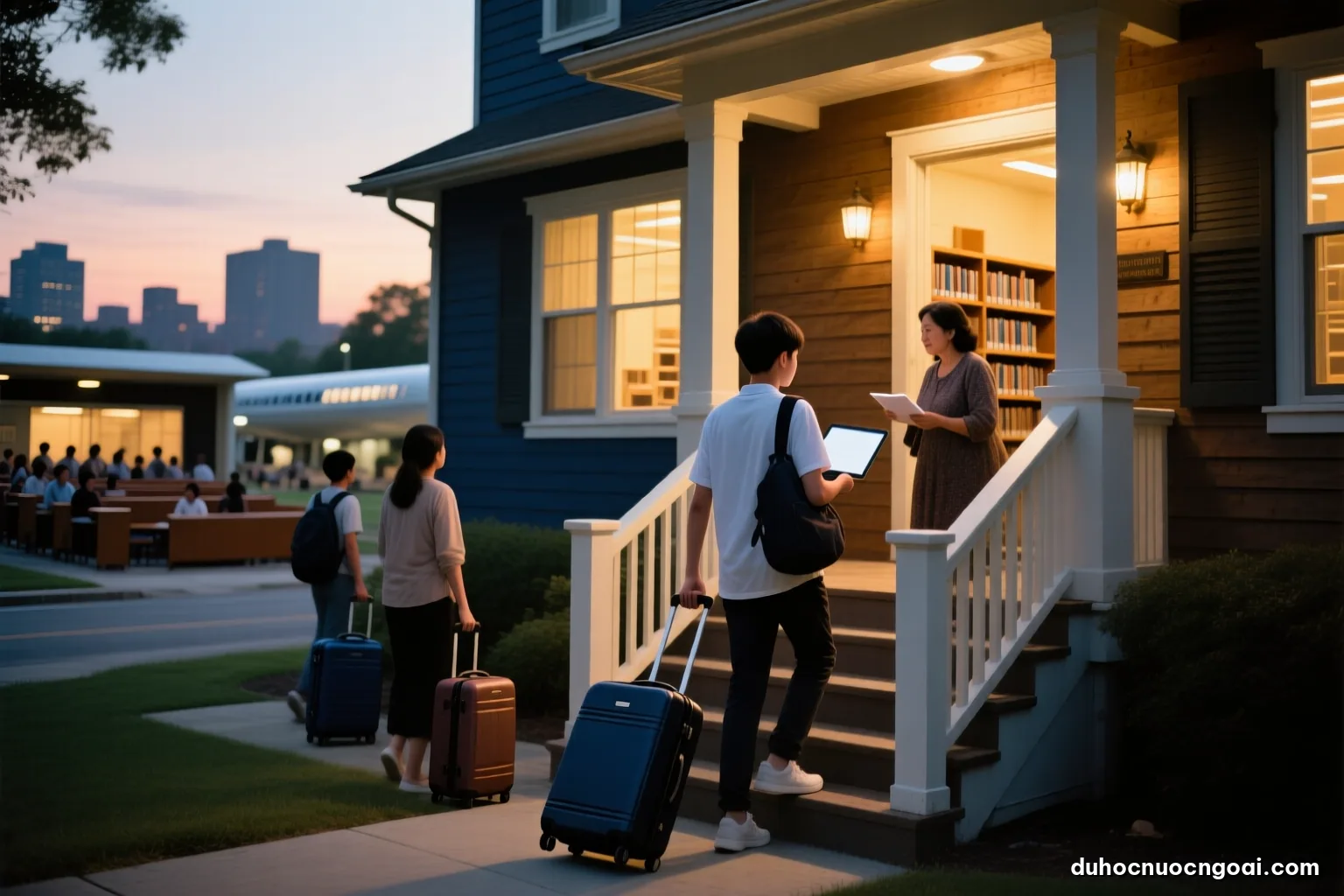
Homestays arranged by schools, school districts or professional companies usually go through a vetting process, but families still have the right to ask for details. The following list helps spot problems early:
- How many people are in the family, are there young children, are there pets, and how many other international students are staying there?
- Will your child have their own room, with a desk, a window and their own storage space?
- Which meals are included, does your child prepare their own lunch or does the family, and are dietary needs or allergies respected?
- How far is it from home to school, by what means of transport, how long does it take, and is it safe after dark?
- What are the rules on curfew, internet use, visitors and sleepovers at friends' houses?
- Who is the contact person when there is a problem with the homestay family, and how long does it take to change accommodation if it isn't working?
- Have all adults in the household passed background checks under the host country's rules, and are the results updated regularly?
- What does the homestay fee include: meals, laundry, transport, internet; which costs are extra?
Don't be afraid to ask; a professional provider will answer clearly and in writing. Also tell your child that feeling uncomfortable is a legitimate reason to ask for a change, not a sign of weakness.
The layers of safety checks families have the right to ask for
In countries that take many international students who are minors, adults working directly with children must pass background checks. In the UK this is the DBS check, and boarding schools must follow the government's child protection guidance, with a designated safeguarding lead. In Australia, states require a working with children check for adults in homestay families and staff in contact with students. In Canada, guardians and homestay families usually need a police background check. New Zealand has a code of practice for the pastoral care of international learners that schools must follow.
Families don't need to know the name of every procedure, but should ask the school or guardianship company three questions: what background checks have the adults in the homestay passed, who is the school's safeguarding lead, and through which channel can students report an incident if they don't want to tell the homestay family? A good system always has an independent reporting channel, someone who inspects accommodation regularly, and a clear procedure when a student makes a complaint.
At the same time, teach your child some basic rules: never hand over their passport for safekeeping to anyone other than the person the school designates; know the host country's emergency number; know the name and contact details of the safeguarding lead; and understand that nobody has the right to ask them to keep secrets from their parents about things that frighten them.
Documents granting authority and responsibility to prepare
A guardian can only do the job well with clear authority on paper. The document set usually includes a letter from the parents authorising the guardian to make decisions on certain matters such as consenting to emergency medical treatment, signing permission for school trips and receiving notices from the school; copies of the student's passport, visa and health insurance card; information on allergies, chronic conditions and current medication; and the parents' contact details with their time zone. For Canada, the custodianship declaration on the immigration authority's form must be notarised in both countries. For Australia, if a relative acts as guardian, that person must apply for their own visa and is obliged to live with the student.
The contract with a guardianship company should set out the scope of services clearly: airport transfers, attending parents' meetings on the parents' behalf, arranging accommodation during breaks, the response time in an emergency, and whether there are regular reports on your child's studies and health. The guardianship fee is a separate cost, not included in tuition, and needs to be built into the annual budget.
Parents should also keep the initiative: keep copies of all documents, have direct contact with the school, the guardian and the homestay family, and agree a schedule of video calls with your child. Don't let the guardian become the only channel between the family and the school. When your child is about to turn 18, ask the school and the immigration authority in advance how the guardianship arrangement ends and whether your child needs to move accommodation or change visa type, so you are not caught off guard mid-year.
When something happens: illness, conflict, discipline
Your child is ill or has an accident. The homestay family or boarding staff take them to see a doctor and inform the guardian and the school. International student health insurance usually requires you to keep receipts, so tell your child not to throw away medical paperwork.
Conflict with the homestay family. The first step is a direct conversation with the coordinator present. If things don't improve, the student has the right to ask for a change of accommodation, and a good provider will deal with it within a few weeks.
Your child faces disciplinary action at school. The guardian is usually invited to the meeting in place of the parents. Parents should join by video if possible and ask clearly about the procedure, the right of appeal and any effect on the visa.
Your child is persistently unhappy. Homesickness in the first month is normal; prolonged sadness, skipping meals or skipping classes are signs that they need to see the school counsellor. Don't wait until the holidays to deal with it. If your family would like someone to review accommodation and guardianship options with you before choosing a school, the Global Gate Pass advisory team offers a free first consultation with no obligation.
Frequently asked questions
Is a homestay family the same as a guardian?
Not automatically. The homestay provides accommodation and daily care; the guardian takes legal responsibility and makes emergency decisions in place of the parents. A homestay family can be appointed as guardian if the school and the host country's rules allow it, but there must be clear documents.
Can we ask an acquaintance abroad to be the guardian?
Yes, if that person meets the school's conditions and the host country's rules, for example being a legal resident, of age, ready to come to the school when needed and holding documents granting authority. Think carefully about what they can realistically do, because busy acquaintances often find it hard to respond quickly when something happens.
In Australia, can a parent go and live with their child?
Yes. Australia has a student guardian visa for parents or relatives over 21 to live with a student under 18. Holders of this visa are obliged to care for the student and have limited rights to work and study under the current rules of Australia's Department of Home Affairs.
Where does my child stay when the boarding house closes during breaks?
The guardian arranges accommodation for short breaks, which may be a temporary homestay or the guardian's own home. For long holidays such as summer and the Christmas and New Year break, most students go home. Families should ask for the boarding house closure dates at the start of the year so they can book flights and accommodation early.
How can I tell whether a homestay is safe?
Ask the provider about background checks on the adults in the household, how often the accommodation is inspected, and the independent reporting channel for students. Ask for photos of the room, have a video call to meet the family before your child arrives, and tell your child to report immediately anything that makes them uncomfortable.
Is the guardianship fee included in tuition?
Usually not. Guardianship and homestay fees are separate costs, charged per year or per week, and may come with airport transfer fees and holiday fees. Families should ask for an itemised list to include in the annual budget.