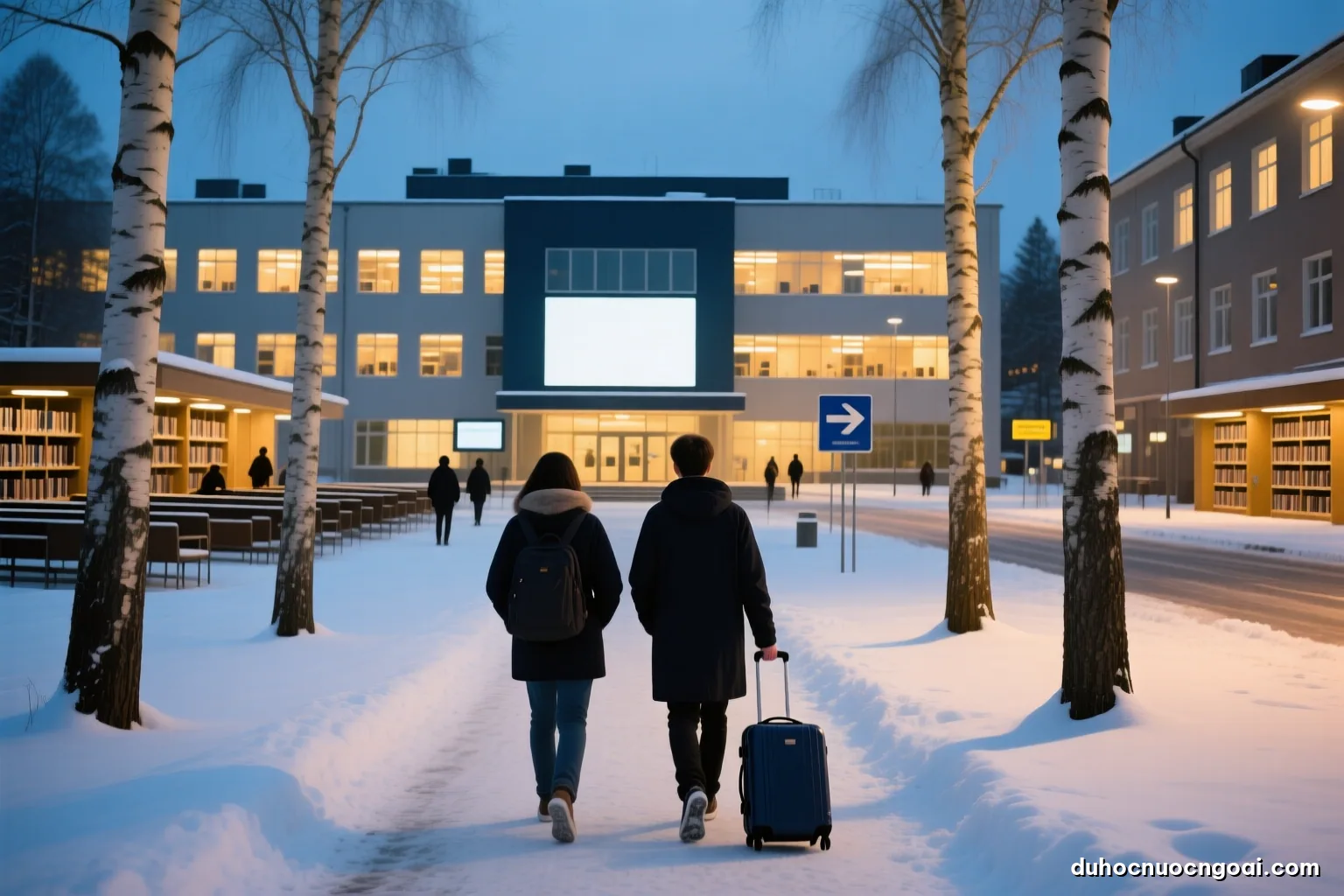
Sweden, Denmark and Norway all charge tuition fees to students from outside the EU/EEA: Denmark since 2006, Sweden since 2011 and Norway since the autumn 2023 intake at public universities. The days of "free Scandinavia for everyone" are over; what remains is high-quality teaching, many master's programmes taught in English, an egalitarian learning environment, and living costs among the highest in Europe.
The three countries share a similar academic culture but differ in application portals, timelines, proof-of-funds requirements, part-time work limits and post-graduation policy. This article puts them side by side, walks through how to apply to each, the scholarships that really exist, and the things Vietnamese students are most often surprised by when they arrive in Scandinavia.
The three countries side by side
The table summarises the main differences. Specific amounts and time limits change, so we only describe the mechanism; the figures must come from the immigration authority and the university in the year you apply.
| Criterion | Sweden | Denmark | Norway |
|---|---|---|---|
| Tuition for non-EU students since | 2011 | 2006 | Autumn 2023 (public universities) |
| Main application portal | National admissions portal, with an application fee | National portal for bachelor's; master's applications go to the university | Apply directly through each university's system |
| Part-time work while studying | No fixed hourly limit, but study must be the main purpose | Weekly hour limit during the academic year, full-time in the summer months | Weekly hour limit during the academic year, full-time during holidays |
| Proof of funds | At the monthly rate published by Migrationsverket | At the rate published by SIRI | Usually you must deposit or show one year's funds at the rate published by UDI, which is on the high side |
| Staying on to look for work | Post-graduation job-seeking permit available | A card for graduates of Danish institutions | Post-graduation job-seeking permit available |
The table shows that Sweden is the most flexible about part-time work, Denmark has a centralised bachelor's process, and Norway, having only recently introduced fees, is still adjusting its policy and has high financial requirements. None of the three is cheap once living costs are added.
Sweden: one portal, an application fee and the Swedish Institute scholarship
Sweden handles admission to most programmes through the national portal, University Admissions. You create one account, choose up to a set number of ranked options, upload your documents once and pay an application fee (non-EU applicants must pay; the amount published for many years has been 900 krona, but check it). The main round for the autumn semester usually opens in October and closes around mid-January, with results around early April.
There are not many English-taught bachelor's programmes in Sweden; its strength is at master's level, with programmes usually lasting one or two years. Public universities offer tuition-reduction scholarships for non-EU students. The best-known scholarship is the Swedish Institute's programme (Swedish Institute Scholarships for Global Professionals), which is for master's study, covers tuition and living costs, and favours people with work experience and leadership potential; the list of eligible countries is published each year, so check whether Vietnam is on it in the year you apply.
After graduating, holders of a study permit can apply for a residence permit to look for work or start a business, and the maximum length was raised to 12 months in 2022. Sweden has also raised the minimum salary for non-EU work permits, so check the current level when you job-hunt.
Denmark: project-based learning, the bachelor's quota system and a card for graduates
At bachelor's level, Denmark admits students through a national portal; international students usually apply under the assessment-based route (known as quota 2), with a common deadline in mid-March for the autumn intake. At master's level, you apply directly to the university, with deadlines that vary by programme, many falling early in the year. Both levels have English thresholds and specific subject requirements; a Vietnamese high school diploma usually needs careful comparison with the entry requirements, and some programmes ask for an additional year of university study.
Danish teaching is known for project-based learning and teamwork, especially at universities built around a problem-based learning model. Vietnamese students used to individual study and written exams may find the first year disorienting: grades come not only from exams but from group reports, oral defences and participation in discussion. Preparing for this mindset and these skills early will reduce the shock.
On tuition, non-EU students pay the full cost of their education as set by the university; the government offers Danish Government Scholarships allocated through universities, with few places. On part-time work, a study permit allows a set number of hours per week during the academic year and full-time work in the summer months, as regulated. Graduates of Danish institutions can apply for a temporary residence card to look for work (the Establishment Card), which lets them stay for a period to find a job or start a business; check the specific conditions on Denmark's immigration portal.
Norway: a new policy, high financial requirements and how to read it correctly
For many years, Norway's public universities charged no tuition to any student, including those from outside Europe, which made Norway a sought-after destination. From the autumn 2023 academic year, Norway began charging tuition to students from outside the EU/EEA and Switzerland at public institutions. Some cases, such as exchange students under agreements or certain partnership programmes, have their own rules. Information online from before 2023 saying "Norway has no tuition fees" is now out of date.
Norway's financial requirement is on the high side: the Norwegian Directorate of Immigration (UDI) requires proof of enough money to live on for one year, at a rate published annually, usually by depositing the amount into the university's account or a Norwegian bank account. Add the new tuition fees and the total first-year cost in Norway is now among the highest in the region.
In return, Norway has a stable labour market in energy, maritime and engineering, and a policy allowing graduates to apply for a job-seeking permit. As in the other Scandinavian countries, Norwegian is a big advantage when looking for work; anyone planning to stay should start learning it early.
Preparing a master's application for Scandinavia
Read the prerequisite credit requirements carefully. Scandinavian master's programmes usually state the minimum number of credits in specific subjects, such as mathematics, statistics, programming or economics. An application with a sufficient GPA but missing prerequisite credits will still be rejected. Convert your Vietnamese transcript into ECTS credits as the university instructs and mark which requirement each course meets.
A short, specific motivation letter. Scandinavian admissions committees do not favour flowery prose. A good letter answers briefly: what you have studied and done that is relevant, why this programme and not another, what you contribute to group-based classes, and what you plan to do afterwards. Accurate details about the university's courses, research groups or projects show that you have read carefully.
Documents in the right format from the start. Degrees, transcripts, translations and language certificates must follow the format the portal requires; some places require the institution to send documents directly, others accept certified copies. One missing document means the application is not assessed, usually with no chance to add it after the deadline.
Apply for scholarships at the same time or earlier. University and government scholarships often have deadlines that coincide with or come before programme deadlines. Missing a scholarship deadline means paying everything yourself, so draw up a deadline table covering both.
Budgeting for Scandinavia so you do not run short mid-year
In Scandinavia, the proof-of-funds level set by the immigration authority is calculated to cover a frugal standard of living. People who budget at exactly that level often fall short on items few people write down: a housing deposit (often several months' rent), winter gear, student union fees, books and equipment, and a flight home if there is a family matter. A hypothetical example: a student budgets at exactly the monthly minimum, but in the first month has to pay a deposit and buy a coat, shoes, bedding and a transport card all at once, so first-month spending can be double a normal month.
The safe approach is to split the budget into three parts: one-off costs on arrival, regular monthly costs, and a reserve equal to several months of living expenses. Income from part-time work, if any, should only be counted from the second semester, once you have settled into your timetable and know how many hours you can work without affecting your progress.
What surprises Vietnamese students most in Scandinavia
The list below comes from stories that international students and alumni have told again and again. Knowing them in advance will not make them disappear, but it helps you prepare properly.
- Flat teacher–student relationships. Calling lecturers by their first name and arguing directly with them is normal; staying silent in class may be read as not having prepared.
- Academic integrity is taken very seriously. Plagiarism, using tools against the rules or copying group work can all lead to suspension; read the rules on citation and the use of AI tools carefully for each course.
- Everything costs a lot. Eating out, transport, alcohol and services are all expensive; Scandinavian students routinely cook for themselves.
- Housing has queues. In Stockholm, Copenhagen and Oslo, student housing has waiting lists; many universities guarantee housing for first-year international students who register on time, but not all of them.
- Dark winters. A long lack of daylight affects sleep and mood; the university's health services and counselling are worth turning to early.
- A cashless society. Many places barely accept cash; you need a personal identity number to open a bank account and use electronic ID services.
Frequently asked questions
Is studying in Scandinavia still tuition-free?
For students from outside the EU/EEA, Denmark has charged tuition since 2006, Sweden since 2011 and Norway since autumn 2023 at public universities. Doctoral study is usually a salaried position with no tuition. Some exchange programmes or scholarships have their own waivers.
Should I choose Sweden, Denmark or Norway?
Choose the specific programme first, then weigh tuition, proof of funds and the policies on part-time work and staying on. Sweden is flexible about part-time work and has the Swedish Institute scholarship; Denmark is known for project-based learning; Norway has high financial requirements now that it charges tuition.
Who is the Swedish Institute scholarship for?
The Swedish Institute's scholarship programme for global professionals is for master's study and favours applicants with work experience and leadership potential from countries on the eligible list published each year. It covers tuition and living costs and is highly competitive.
Are students in Sweden limited in how many hours they can work?
Sweden sets no fixed hourly limit for students with a study permit, but study must be the main purpose and you must make sufficient academic progress to have your permit extended. Working so much that you fail courses can affect your permit.
Do I need to know Swedish, Danish or Norwegian?
Not for an English-taught programme, as Scandinavians speak English very well. But to find steady part-time work and a job after graduation outside international companies, the local language is a big advantage. Many universities offer free language classes for international students.
How high are living costs in Scandinavia?
All three countries are among the most expensive in Europe, especially for housing in the capitals. The proof-of-funds level published annually by the immigration authority is a bare minimum; actual spending is usually higher if you live in Stockholm, Copenhagen or Oslo. Cooking for yourself and living in student housing cut costs considerably.