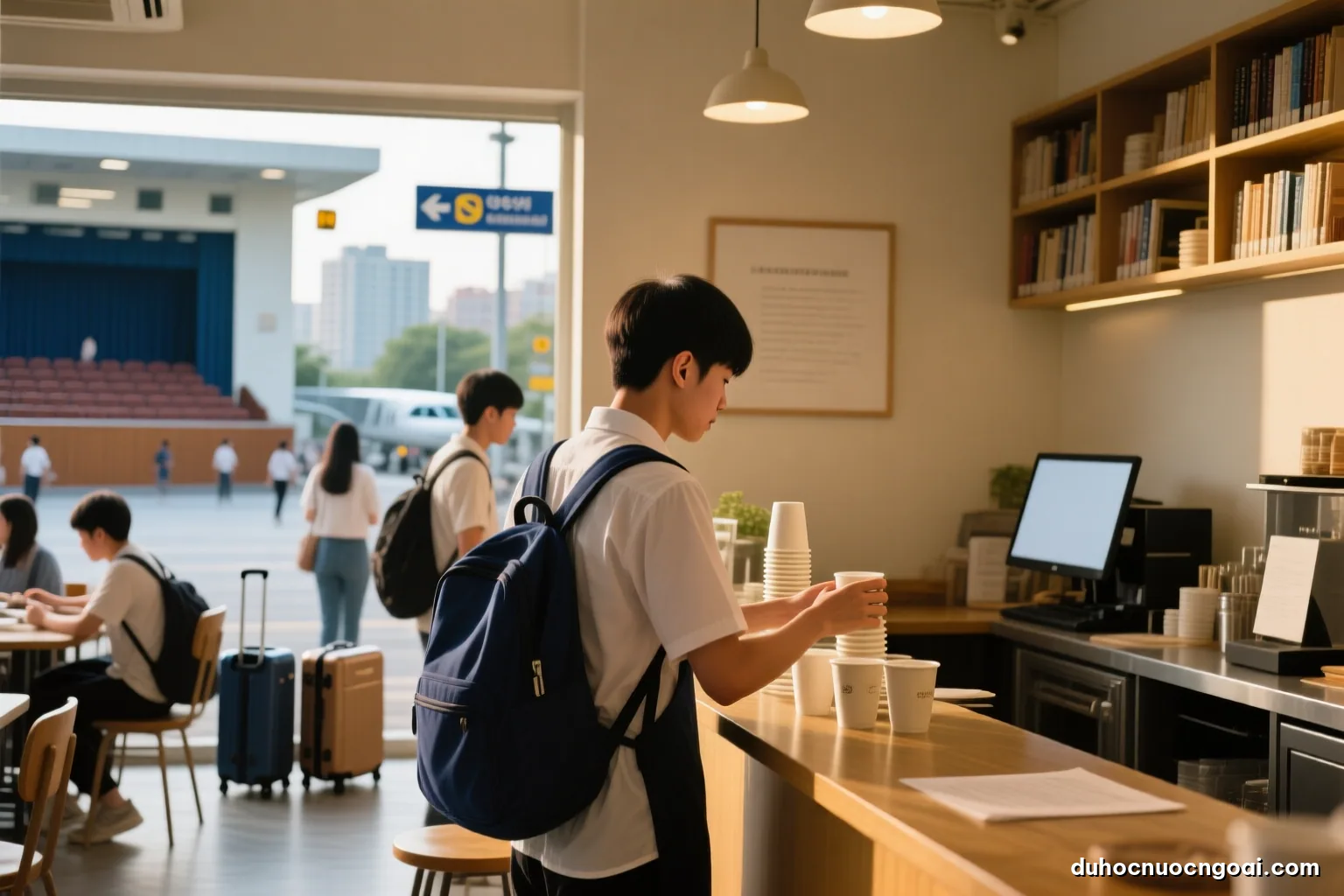
International students in Korea may work part-time, but they must obtain a part-time work permit from the immigration authority before starting, work only within the hour limits set by visa category, level of study and Korean ability, and stay out of prohibited fields. D-4 language students can usually only apply for permission after a certain period of residence and have a lower cap on hours than D-2 students.
Working without a permit, beyond the permitted hours or in the wrong field can lead to fines, cancellation of your residence status and being made to leave Korea, and it also affects your university. The rules on working hours have been adjusted many times and may change again, so this article explains the principles, the steps for obtaining permission, workers' rights and the real risks; the exact figures for the year you go must always be checked on the HiKorea portal or with your university's international office.
Applying for a part-time work permit: the usual steps
A part-time work permit is issued for each workplace, not as a general permit for any job. The usual order is as follows:
- Check your own eligibility: you have resided for the required period (for D-4), you hold an alien registration card, your attendance and grades meet the university's standard, and your language ability meets the level required for the hours you want to work.
- Find a workplace and agree on the job, hours and pay; get a written employment contract and the workplace's business registration documents.
- Obtain confirmation from the international office or the person responsible for international students at your university, on the prescribed form.
- Submit the permit application via the HiKorea portal or at the immigration office, with the contract, the university's confirmation and the workplace documents.
- Start work only after you have the permit. When you change workplace, apply again for the new one.
Many people skip the last step: working at a second place without a permit for that place is still unauthorised work. Keep copies of the permit and contract, because when you extend your stay or if a dispute arises, they are proof that you worked legally.
Limits on working hours: principles rather than fixed figures
Korea's rules on international students' part-time hours are built on the principle that "study comes first". Language students have the lowest cap during term. Bachelor's students may work more, graduate students usually more still, and the hours are also linked to Korean ability: reaching the required TOPIK level allows more hours, while those who have not reached it are held to a lower limit. In some years students at certified universities have had extra hours.
During the summer and winter breaks and at weekends, the rules for some categories are usually looser than during term. But "looser" does not mean unconditional: you still need a permit, fields are still restricted, and your attendance in the following term is still assessed.
Because these figures are adjusted from one policy period to the next, the only reliable advice is to read the current guidance right before applying for permission, and to ask your university's international office. The experience of someone who went a few years before you may already be out of date. Working slightly over the hours, even with the employer's agreement, is still your own violation.
Prohibited or restricted fields
International students may not do every kind of job. The groups below are usually prohibited or have special conditions; the exact list is in the immigration authority's guidance:
- Night-time entertainment venues and businesses with sensitive elements: prohibited.
- Jobs through unregistered employment brokers, or working for someone without a business registration: high risk, and usually not permitted.
- Certain sectors such as construction and manufacturing: prohibited, or allowed only when special conditions on language ability and type of work are met, depending on the rules of the period.
- Work requiring a professional licence or falling under another work visa category.
- Motorbike delivery for platforms, or freelance work without a contract: check the current rules carefully; in many cases these are not permitted for international students.
Common and safer jobs for international students are serving in restaurants and cafes, convenience stores, teaching assistance, interpreting and jobs on campus. When a job pays unusually well compared with the going rate, ask yourself why; it is often prohibited or risky.
Workers' rights that international students often do not know about
Minimum wage. Korea announces an hourly minimum wage every year, which also applies to foreign part-time workers. Paying less is a violation by the employer. Check the current year's rate on the website of Korea's Ministry of Employment and Labor.
A written employment contract. Korean labour law requires the contract to state working hours, pay, payday and days off. Without a contract it is hard to obtain a permit and hard to claim your rights in a dispute.
Weekly holiday allowance. Under Korean labour law, those working at least a certain number of hours per week are usually entitled to a paid weekly holiday allowance. Many international students do not know about it, so they never claim it.
Pay by bank transfer and payslips. Ask to be paid by bank transfer and keep your payslips. They are proof of legal income and are also useful when extending your stay or showing your finances.
Where to get help. If you are owed wages or treated unfairly, you can turn to your university's international office, support centres for foreign workers, or the local labour office. Support centres often have Vietnamese-speaking staff.
The real risks of working illegally
The direct risk is being caught through workplace inspections, cross-checks when you extend your stay, or when an accident or dispute occurs. The consequences can include a fine, a recorded violation, refusal of extension, cancellation of residence status and being made to leave the country. Employers are also fined, so fewer and fewer places are willing to take students without permits.
The indirect risks are ones few people think about. Unauthorised workers usually have no contract, so if wages are withheld they cannot claim them, and if they are injured at work they find it hard to get compensation. Night work and overwork lead to missed classes, low attendance and poor grades, which in turn lead to refusal of extension. This downward spiral is the most common path by which international students end up residing illegally.
If you have already made a mistake, for example working for a few weeks before getting the permit, the sensible thing is to stop immediately and ask your university's international office how to handle it, rather than carrying on and hoping nobody notices. A minor violation corrected early is usually treated far more lightly than a prolonged one discovered at extension time.
Each person's behaviour also affects the whole community. When a university's rate of student violations rises, it may lose its certification or be restricted from visa issuance, making it harder for next year's Vietnamese students to get visas for that university. This is why Korean universities monitor international students' attendance and part-time work ever more closely.
Where to find part-time work and how to spot risky offers
The safest job-hunting channels usually start with the university. A suggested order from safest to most in need of caution:
- The university's job board and international office: jobs on campus, teaching assistance, office assistance, jobs from companies that partner with the university.
- Referrals from lecturers and the careers office: usually connected with your subject, and valuable for later job applications.
- Popular part-time job websites in Korea: plenty of choice, but you must check yourself that the workplace has a business registration and is willing to sign a contract.
- Community social media groups: convenient, but full of unauthorised offers, brokers who charge fees, and jobs in prohibited fields.
Risky offers tend to look alike: no contract, cash payment without payslips, promises like "no permit needed, we know people here", work far from campus, night shifts, unusually high pay, or a go-between asking for a fee up front. If you see any of these signs, stop and ask your university's international office before accepting.
Also be wary of offers to work in another city during the break with "all-inclusive" accommodation. In many cases students have been taken to work in prohibited fields, had their documents confiscated or not been paid. Your alien registration card and passport are your documents; nobody has the right to keep them for you.
Working wisely: choose jobs that help your future
If you decide to work part-time, choose jobs that are both legal and help you move forward. Campus jobs such as department office assistant, support for new international students, library assistant or research assistant are usually flexible around your timetable and close to the academic environment. Korean–Vietnamese interpreting and translation for properly licensed companies and organisations help you practise professional language and build your CV.
For those planning to return to Vietnam to work for Korean companies, experience of part-time work in a Korean office environment, however brief, is a plus at interview. For those planning to look for work in Korea after graduation, an internship in your field is worth far more than hours worked in a restaurant. Ask your university's careers office about credit-bearing internships, which are usually not counted as ordinary part-time work if they follow the rules.
Finally, keep a sensible balance between study and work. A simple tip is to look at the term calendar, mark the exam weeks and not take on extra shifts in those weeks. If you would like someone to review your financial plan with you so you do not have to rely on part-time work in the first year, the Global Gate Pass advisory team takes bookings; the first session is free.
Frequently asked questions
How long before D-4 students can work part-time?
Language students usually have to reside for a certain period after entry, together with meeting attendance and language conditions, before they can apply for permission to work. The exact period and hour cap follow the current guidance; check the HiKorea portal before looking for a job.
Does part-time work affect visa extension?
Working with a permit has no negative effect, and payslips are even evidence of legal income. Working without a permit, beyond the permitted hours, or in a way that lowers your attendance and grades can lead to refusal of extension. The immigration authority also looks at your academic results.
Can I work in two places at once?
Yes, if each place is covered by a permit and the total hours do not exceed the cap. Every time you add or change a workplace you must apply again. Working at a second place without a permit is still unauthorised work, even if the first place is covered.
Do international students pay income tax on part-time work?
Part-time income in Korea is taxable under Korean rules; many employers deduct it directly from wages. There may be a year-end settlement procedure. Keep your payslips and ask the international office or local tax office to make sure you do it correctly.
What should I do if my employer owes me wages?
Gather your contract, timesheets, messages and bank statements; contact your university's international office and a support centre for foreign workers for guidance on filing a complaint with the labour office. Having a part-time work permit makes it easier to claim your rights.
Does an internship count as part-time work?
Credit-bearing internships within your programme are usually governed by separate rules and may not count as ordinary part-time work. Paid internships without credit usually still require a permit. Ask the careers office and read the guidance before accepting.