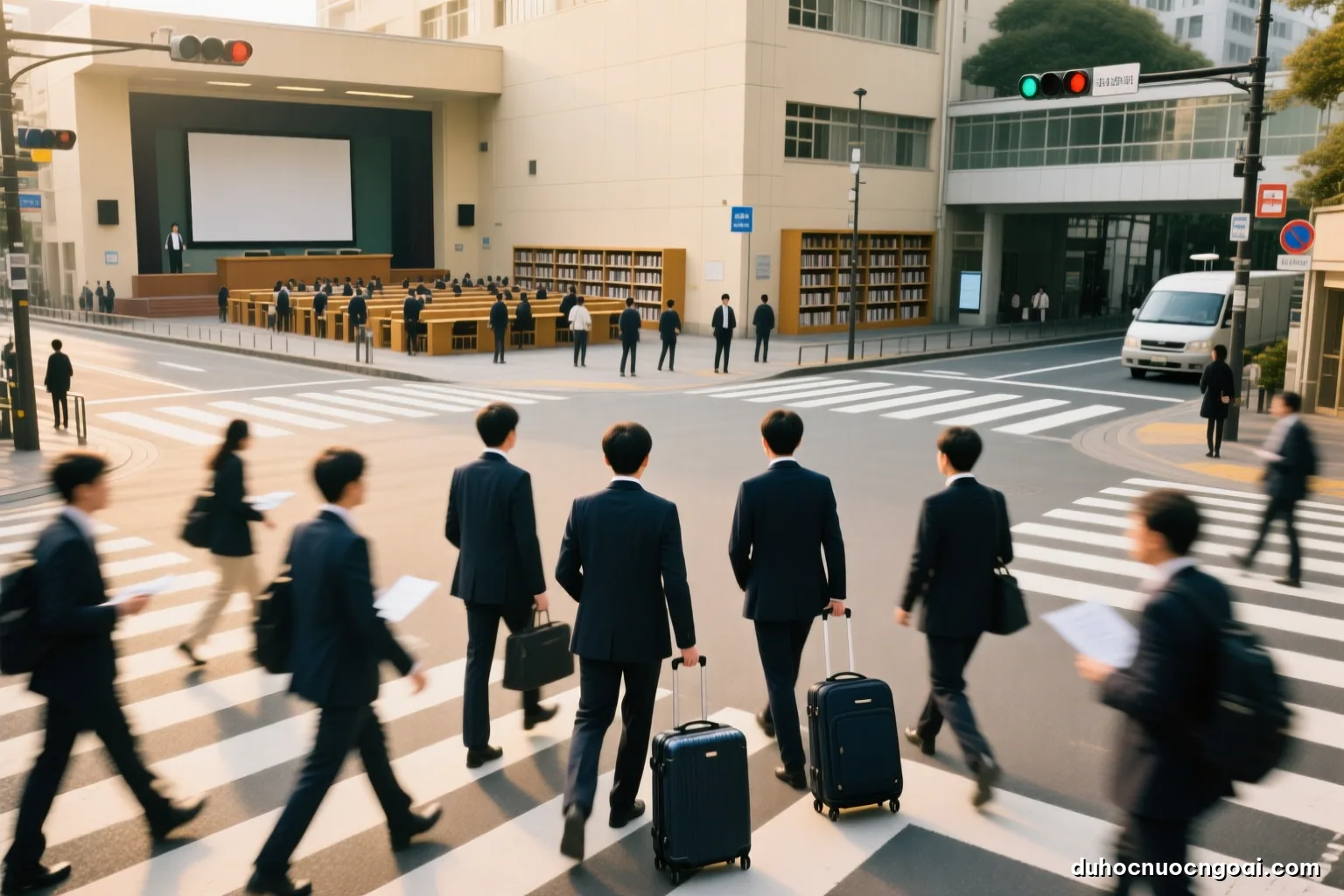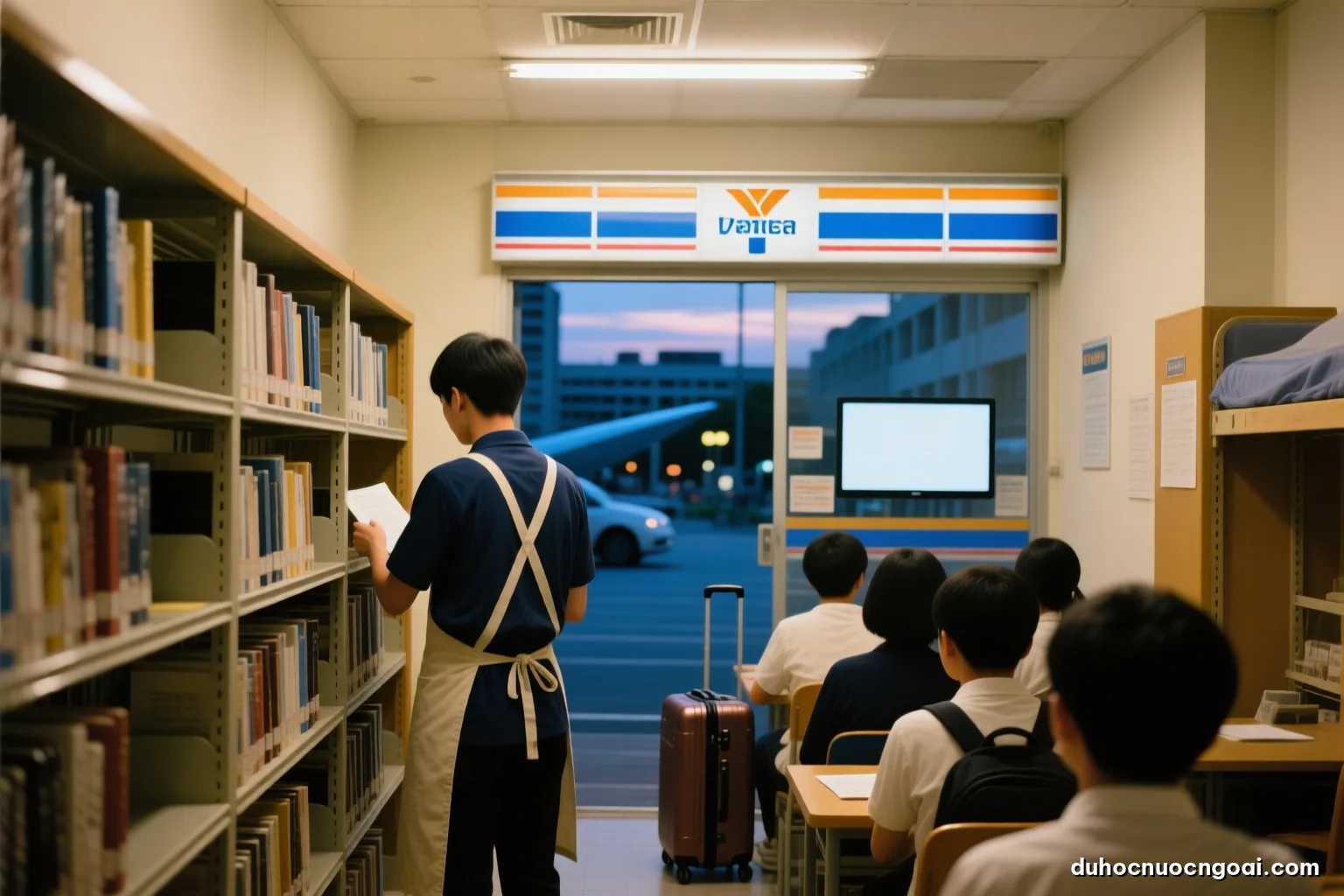
International students in Japan may only work part-time with permission to engage in activities outside their status of residence, limited to a maximum of 28 hours a week during term and a maximum of 8 hours a day during long holidays set by the school. You may not work at establishments classed as adult entertainment businesses, such as hostess bars, pachinko or mahjong parlours, even in support roles such as cleaning. Working too many hours or in a prohibited job can mean your residence is not renewed.
Part-time work (arubaito) is a familiar part of student life in Japan: it helps cover living costs, practise the language and understand work culture. But it is also the biggest source of risk to your residence status, especially for those who come to Japan with large loans. This article explains the rules, how hours are counted, workers' rights, tax, and why the "study and work to pay off debt" model is a trap.
Permission for activities outside your status: a mandatory condition
The student status of residence allows you to study, not to work. To work part-time, you need permission to engage in activities outside your status of residence (shikakugai katsudo kyoka). Students can apply for this permission at the airport on entry at ports that offer the procedure; the residence card is then stamped or annotated on the back. If you did not apply at the airport, you submit an application at the immigration office once you are in Japan.
The comprehensive permission for students allows up to 28 hours a week, with no restriction on type of work except prohibited sectors. During long holidays officially set by the school (summer, winter and spring breaks), the limit rises to a maximum of 8 hours a day. The holiday must be one in the school calendar, not days off you choose yourself.
Employers are obliged to check your residence card and permission before hiring you. Any place willing to take on someone without permission is breaking the law, and you are the one who bears the consequences for your residence status.
How the 28 hours are counted: common misunderstandings
The figure of 28 hours looks simple, but many students break the rules because they misunderstand how it is counted.
- It is the total across all jobs. 28 hours is the combined total of all your work, not 28 hours per job. Two jobs at 20 hours each is over the limit.
- It applies to any week. The common interpretation is that in any period of seven consecutive days, your total working hours must not exceed 28. You cannot balance 35 hours one week with 21 the next.
- Working hours are the actual hours in your contract and timesheet. The immigration authorities can compare your income on your tax certificate when you renew your residence. Unusually high income compared with working within the limit is a sign of working too many hours.
- Long holidays must follow the school calendar. Japanese language schools publish their official holiday dates; only during those periods does the 8-hours-a-day rule apply.
- Once you leave the school or graduate, the part-time work permission tied to student status no longer has a basis, unless you switch to another status that allows work.
Jobs international students may not do
Even with permission, international students may not work at establishments classed as entertainment and special services businesses under Japanese law. This category includes venues with staff who entertain customers, such as hostess bars and snack bars serving drinks, adult service establishments, and gaming venues such as pachinko and mahjong parlours. The ban applies to every position in the establishment, including washing dishes, cleaning or working the counter.
Students may also not be self-employed, may not take work under "piecework contracts" that are really employment beyond the hour limit, and may not do work belonging to another status of residence without changing status. Offers of "easy work, high pay", receiving parcels for others, lending out bank accounts or reselling SIM cards are also often linked to criminal activity; students have been arrested for these.
Some common and legal jobs for students: convenience store staff, restaurants, fast-food outlets, food processing plants, warehouses, hotels, and shift-based delivery work with a contract. A good choice is a job that lets you use Japanese, has stable shifts and does not interfere with your classes.
How much part-time income can cover: an illustrative calculation
The calculation below is only a hypothetical example to show the income ceiling within the legal limit. Actual wages depend on the prefecture, the type of work, the hours and your language level.
| Assumption | Example value | Notes |
|---|---|---|
| Hourly wage | 1,100 yen | Close to the national average minimum wage after the 2025 revision; each prefecture has its own level |
| Hours per week during term | 28 hours | The ceiling; many people work less when busy with study |
| Income per week | about 30,800 yen | 1,100 × 28 |
| Income per month (about 4.3 weeks) | about 132,000 yen | Before tax and any deductions |
| Long holidays | Higher | Up to 8 hours a day during the school's holiday period |
At the ceiling, this income can cover a large part of living costs in many cities, but leaves almost nothing over to pay tuition. In practice, in the first year your Japanese is still weak, many students cannot find enough hours straight away, and they also need time to prepare for exams. According to Japan's Ministry of Health, Labour and Welfare, the national average minimum wage for fiscal year 2024 was 1,055 yen an hour, and the 2025 revision brought the average above 1,100 yen; each prefecture has a different level, with Tokyo the highest.
Part-time workers' rights and tax
Students working part-time are protected by Japanese labour law like any other worker: they must be paid at least the minimum wage of the prefecture where they work, receive overtime and night-work premiums as regulated, have the right to written notice of working conditions, and have the right to paid leave once they meet the service requirement. Being paid below the minimum wage, having wages withheld or having your residence card confiscated are violations; you can seek help from the labour standards inspection office or advice services for foreign residents.
On tax, part-time income is subject to income tax, usually withheld at source depending on the wage level; annual income above certain thresholds gives rise to income tax and residence tax the following year. At the end of the year, your workplace will carry out a year-end adjustment or issue a withholding tax certificate. Some students may be exempt from tax on part of their income under a double taxation agreement between Japan and their country, depending on the conditions; ask the tax office or your school rather than guessing.
Your tax certificate and proof of residence tax payment may also be requested when you renew your residence. This is why your declared income must be consistent with the limit on working hours.
Finding part-time work the right way
How you look for work affects how safe the job is. The steps below help you avoid non-transparent workplaces.
- Complete your address registration, have a residence card with permission to work part-time, and a bank account to receive your wages.
- Search through legitimate channels: popular Japanese part-time job sites, your school's notice board, the public employment service (Hello Work) with support for foreigners, or apply directly at shops displaying a hiring notice.
- Prepare a CV on the Japanese template (rirekisho), stating your status of residence and limit on working hours correctly.
- At the interview, make clear that you are a student and can only work within the permitted hours, and ask about shifts, the hourly wage, allowances and how you will be paid.
- Read the written notice of working conditions carefully before you start; keep a copy and your monthly timesheets.
The better your Japanese, the wider your options. In the first year, many students start with jobs requiring little communication, such as warehouse work or food processing, then move to shops and restaurants as their Japanese improves. Customer-facing jobs are harder but help your Japanese progress quickly, which benefits your entrance exams and your job search later on.
Balancing study and work at each stage
The first three months are a period of adjustment: studying the language, completing paperwork, learning your way around and getting to know prices. Many students work little or not at all during this period and are fine, as long as their family has prepared enough money for the first months. This is the time to focus on classes, because your placement results and attendance in the first months affect the whole course.
From the fourth month to the end of the first year, you can work regularly but should stay below the ceiling so you still have energy to study and prepare for the JLPT. The second year at a Japanese language school is the year of entrance exams for senmon gakko or university: many students deliberately cut their shifts during the season for EJU revision, applications and interviews. Losing a few months of income is better than failing the exam and losing a whole year.
Once at a senmon gakko or university, the timetable is denser and there are more assignments. Choose work with flexible shifts, and tell your workplace about your exam dates in advance so your shifts can be arranged sensibly.
Why "study and work to pay off debt" is a trap
The numbers do not add up. As the calculation above shows, working exactly 28 hours mostly covers living costs. Paying off a large debt in Vietnam on top of that almost forces you to work over the limit or in prohibited jobs.
Studies get neglected. Working night shifts and going to class in the morning leads to falling asleep, missing classes and falling attendance. Japanese language schools report attendance, and low attendance is a common reason for residence renewals being refused.
Losing your status of residence. Working too many hours can lead to non-renewal, revocation of your status of residence or being forced to leave Japan. The debt remains in full, while the path to further study has closed.
Easy prey for bad actors. People who urgently need money are targets for illegal job offers, account rental and parcel-receiving schemes. The consequences can include criminal charges.
Frequently asked questions
How soon after arriving in Japan can I start working part-time?
If you applied for permission for activities outside your status at the airport, you can work as soon as you find a job. However, many schools advise waiting a few weeks to settle into study and daily life, and you need to complete your address registration and open a bank account to receive wages.
Can I work in two places?
Yes, as long as the total hours across all jobs do not exceed 28 a week during term. You have to manage the total yourself, as each workplace only knows its own hours. Keep timesheets from each job so you can check.
How many hours can I work in the summer holidays?
During long holidays officially set by the school, students may work up to 8 hours a day. The holiday must be in the school calendar; personal days off or sick leave do not count as a long holiday.
Will working a little over the limit be noticed?
It can be. The income on your tax certificate is used when you renew your residence, and employers are obliged to report their employment of foreign nationals. Income above a reasonable level is a clear sign. The risk of losing your status of residence is far greater than the extra money earned.
Can I work remotely for a company in Vietnam?
Paid work while you are in Japan is still considered an activity outside your status of residence, so it requires permission and counts towards the hour limit. For specific cases, ask the immigration office or your school to avoid an unintentional violation.
Does the school help students find part-time work?
Some schools have job notice boards or recommend reputable workplaces, but a good school will put study first. You should look through legitimate recruitment channels yourself, read the conditions carefully and keep a written contract.