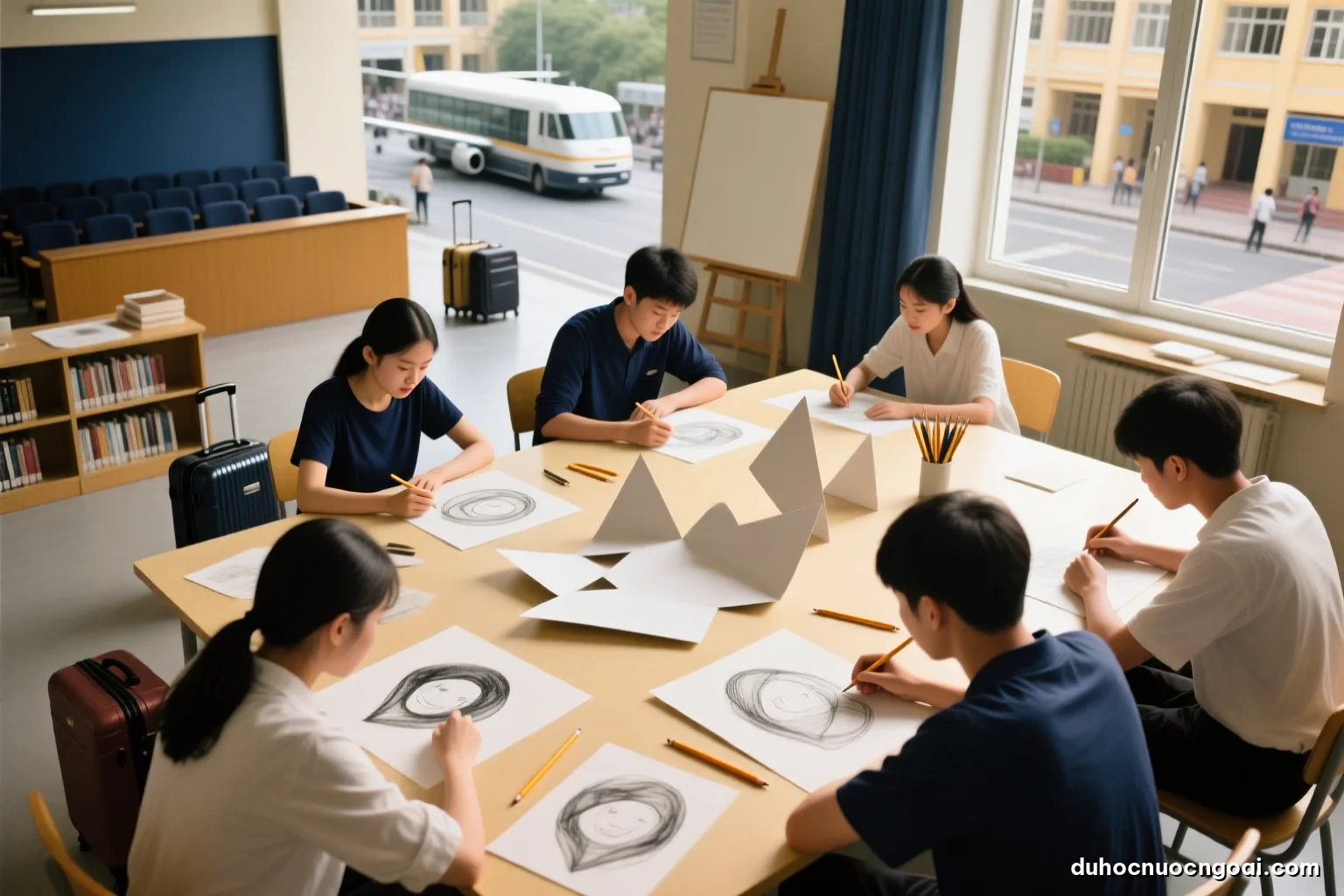
Extracurricular activities carry very different weight in different systems. At selective US universities, which assess applications holistically, extracurriculars are among the parts read most carefully after academics; in the UK, committees mainly care about subject-related activities (often called super-curricular); in Australia, Canada and most of Europe and Asia, bachelor's admission is mainly grade-based, and extracurriculars only matter for scholarships or some specific programmes.
Wherever extracurriculars are considered, committees look for the same things: depth, role and impact, not the number of clubs. Two or three activities sustained over many years, with growing responsibility and measurable results, are usually more convincing than ten activities of a few weeks each. This article explains how committees read extracurriculars, how to choose and develop activities, and how to write the activities list within tight character limits.
How much extracurriculars weigh in each system
The table describes general trends at bachelor's level; individual universities, programmes and scholarships may differ.
| System | Weight of extracurriculars | Types of activity noticed |
|---|---|---|
| US (selective universities) | High, read alongside academics, essays and recommendations | Long-term commitment, leadership, personal initiative, community service, part-time work, family responsibilities |
| US (less selective universities) | Medium; affects scholarships more than the admission decision | As above, to a lesser degree |
| UK | Low if unrelated to the subject | Further reading, online courses, academic competitions, projects and internships related to the subject |
| Australia, Canada, New Zealand | Low for admission; meaningful for scholarships and specific programmes | Academic achievement, leadership, community service |
| Europe, Asia | Usually low | Academic achievement, competitions; social activities for scholarships |
One practical conclusion from this table: if your list is mainly Australia, Canada and Europe, time spent on academics and language is worth more than chasing extra clubs. If you are aiming for selective US universities or competitive scholarships, extracurriculars need planning from grades 9 and 10, not hasty construction in grade 12.
What committees look for when reading extracurriculars
Depth and time. An activity sustained over several years, with significant hours each week, shows you genuinely care rather than doing it to fill your application. The Common App activities list asks explicitly for hours per week, weeks per year and the grades in which you took part, so these figures are immediately visible.
A growing role. From member to person in charge of one area, then initiator of a new project — that progression says more about leadership than a standalone title of "president".
Measurable impact. Specific figures, even small ones: the number of people taught, money raised, events organised, things produced. Impact need not be large; it needs to be real and specific.
Consistency with the rest of the application. Activities linked to your intended subject or to the story in your essay make the application coherent. Not every activity has to relate to your subject, but there should be a clear thread.
Your circumstances. US committees read extracurriculars in context. Working part-time to help your family, caring for siblings or elderly relatives are valuable responsibilities that count as activities; students in provinces with few clubs are not measured by the same yardstick as students in big cities.
Choosing and developing activities: quality over quantity
An effective approach is to choose one to three activity "threads" and invest in them seriously, rather than spreading yourself thinly. A thread may be academic (small-scale research, competitions, reading deeply in a field), social (a community service project you started or sustain), arts or sport at a serious level, or work. Each thread should answer three questions: what you did, what you changed, and what you learned about yourself.
Activities you started yourself, even on a small scale, are usually worth more than pre-packaged paid activities. A free English group for children in your neighbourhood kept going for two years, a channel sharing chemistry knowledge with content you made yourself, a small app solving a real problem at your school — these say more about you than a short paid volunteering trip abroad. Admissions committees are familiar with packaged programmes; they are not forbidden, but they are rarely a highlight.
For UK subjects, think in terms of super-curricular activities: reading subject books beyond the syllabus, taking a university's online course, entering essay competitions or subject olympiads, doing a small subject-related project. These activities are both material for your Personal Statement and proof that you understand the subject you chose.
Writing the activities list within character limits
The Common App activities list allows up to ten activities; each has a position field of about 50 characters, an organisation name of about 100 characters and a description of only about 150 characters; the honours and awards section allows up to five entries. Such tight limits force you to write quite differently from prose:
- Order by importance, not chronology. Committees read from the top down, and the first activity should be the one you invested in most.
- Start with strong verbs and drop the subject: "Founded a group…", "Tutored…", "Designed…". Every character counts.
- Include figures: number of people, sessions, money, results. "Taught English weekly to 25 neighbourhood children for two years" is stronger than "Took part in volunteer teaching".
- Do not repeat the organisation's name in the description; it already has its own field, so use the description for what you did and the results.
- Briefly explain little-known organisations if needed: a national competition, a school club — the committee does not know its scale.
- State hours accurately: estimate honestly. Implausible hours (twenty hours a week for five activities at once) make the committee doubt the whole list.
Other systems rarely use such a structured list: UCAS has no separate activities section, so everything goes into the Personal Statement; many Australian and Canadian universities do not ask; scholarships usually give a free description field or a CV. Whatever the format, the principles are still role, figures and results.
Awards, certificates and how to list them at the right level
The honours and awards section is for competitive recognition: excellent-student awards at various levels, olympiads, science and engineering fairs, arts and sports awards, and scholarships received. State the level clearly (school, province, national, international) and the year, and briefly explain the scale when a competition is unfamiliar to foreigners. Certificates of participation are not awards; putting them in the awards section dilutes the real ones.
Do not exaggerate. "National second prize" when it was actually second prize in an online competition run by a tutoring centre is the kind of listing that is easily spotted and leaves a bad impression. Admissions committees are experienced with common competitions; the best approach is to give the correct name and level and let the achievement speak for itself. Your school record, recommendation letters and activities list must match; your homeroom teacher may also be asked to confirm.
An extracurricular path through each year of upper secondary school
For students aiming at selective US universities or competitive scholarships, extracurriculars need time to gain depth. The framework below is a suggestion, not a formula; what matters is that each year your activities move a step forward in responsibility or impact.
| School year | Focus | End-of-year question to ask yourself |
|---|---|---|
| Grade 9 | Try many things: clubs, sports, arts, volunteering, competitions | Which would I genuinely want to continue if nobody made me? |
| Grade 10 | Choose one to three threads, drop what does not suit you; take on specific tasks in a group | Which part of the work have I been responsible for, and what was the result? |
| Grade 11 | Go deeper: start a project, lead an area, compete at a higher level; activities related to your intended subject | What have my activities changed, and how is it measured? |
| The summer before grade 12 | A quality project, course or job; start gathering material for your essays | What from these activities is worth telling in my essay? |
| Grade 12 | Keep going, hand over to the year below, record figures for the list | Does my list accurately reflect the real time and roles? |
Handing a project over to the year below when you leave is a small but valuable detail: it shows the activity is strong enough to survive without you, a kind of impact committees value highly. For students starting late in grades 11 and 12, it is still best to choose few and do them properly, stating honestly how many years you took part rather than trying to fill the list.
Common misconceptions about extracurriculars
Vietnamese parents and students often carry some incorrect assumptions when preparing extracurriculars:
- "The more the better." A long list where each item lasted a few weeks shows a lack of focus. You do not need to fill all ten Common App slots.
- "You must have a leadership title." Leadership shows through initiative and responsibility, not just titles. A member carrying real work is worth more than a nominal president.
- "Expensive paid activities will impress." Committees read impact and initiative, not cost. Pre-packaged activities rarely make a difference.
- "Part-time work is not an extracurricular." Part-time jobs and helping with a family business are legitimate activities and are often viewed well because they show responsibility.
- "Everything has to relate to your subject." In the US it does not; a long-term arts or sports commitment still has value. In the UK it is the opposite: subject-related activities are the focus.
- "Starting in grade 12 is still in time." In time to have activities, not in time to have depth. If you start late, choose few, do them properly and state the time honestly.
Frequently asked questions
Do you need extracurricular activities to study in Australia or Canada?
For bachelor's admission, most Australian and Canadian universities assess school grades and language; extracurriculars are not a requirement. They matter when applying for scholarships, entering some specific programmes or universities that assess supplementary information.
How many extracurricular activities should I have when applying to US universities?
There is no standard number. The Common App allows up to ten activities, but you do not need to fill them all. Two to four long-term activities with clear roles and specific impact are usually more convincing than ten scattered ones.
Do online activities count?
Yes, if they are real activities: a content channel you make yourself, an open-source programming project, an online study group you coordinate. State your role and measurable figures clearly, such as the number of participants or products completed.
What should students in provinces with few clubs do?
US committees read applications in the context of the school and locality. Self-initiated activities, part-time work, family responsibilities and small projects in your neighbourhood all have value. A letter from your counsellor or teacher can explain the school's limited opportunities.
Should I list activities from grades 8 and 9?
The Common App counts activities from grade 9 onwards. Activities started early and continued to the present should be listed, with the years of participation stated clearly. Activities only in grade 8 that then stopped usually need not be included.
Do extracurriculars matter for a master's application?
Much less than at bachelor's level. At master's level, work experience, research and professional projects matter more. Social activities are still useful for government scholarships, where leadership and community contribution criteria are assessed separately.