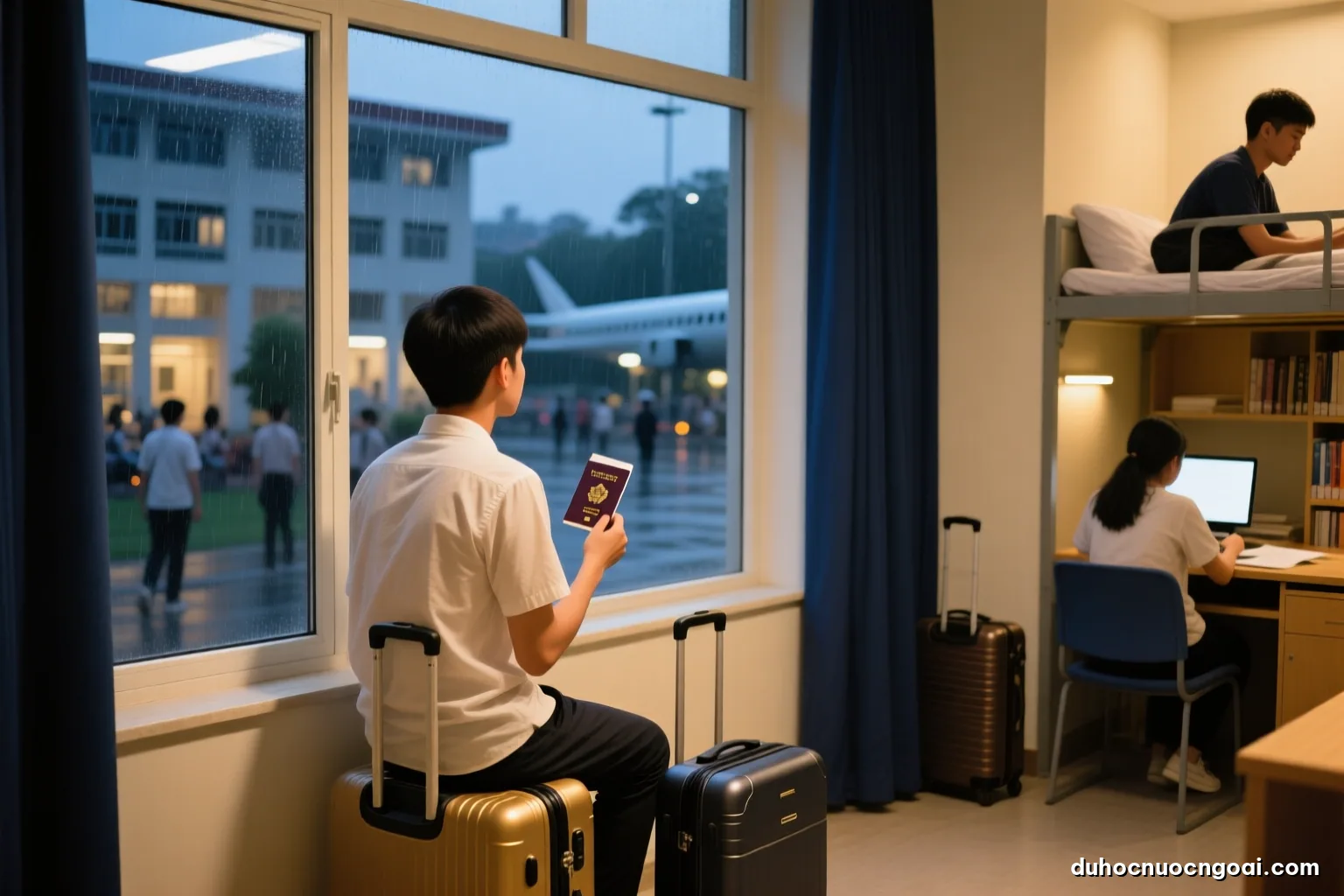
Coming back to work in Vietnam does not always require recognition of a foreign degree. Private companies and foreign firms usually assess qualifications themselves; the degree recognition procedure under Circular 13/2021/TT-BGDĐT of the Ministry of Education and Training is usually needed when you use your degree for recruitment into the public sector, teaching, admission to further study in Vietnam, or regulated professions. Applications can be made online and include copies of the degree, transcripts and related documents; the processing authority may verify directly with the foreign university, so the time taken varies from case to case.
What really needs attention early is the paperwork: certified transcripts, a completion letter, a programme description, and a passport with entry and exit stamps. Requesting these while you are still at university is easy; requesting them again from Vietnam a few years later takes a lot of effort. This article explains when recognition is needed, the difference between recognition and consular legalisation, and the list of documents to bring home.
What degree recognition is and what it is not
Degree recognition is the procedure by which Vietnam's education authority confirms that a degree issued by a foreign institution is lawful and equivalent to a given level in the Vietnamese system, so that it can be used where a legal basis for your level of qualification is required. The outcome is a recognition document stating the degree and the equivalent level. Bachelor's degrees and above fall under the specialist unit of the Ministry of Education and Training; secondary school diplomas are usually handled by provincial departments of education and training.
Recognition is not an assessment of whether you studied well or badly, and it does not convert grades. Nor does it replace the separate conditions for practising a profession: a doctor, pharmacist or lawyer trained abroad must, in addition to degree recognition, meet the licensing conditions under the relevant professional law, which may include practical training, examinations or supplementary education.
Recognition is also different from consular legalisation. Legalisation is the procedure that confirms the signatures and seals on documents issued abroad so that they can be used in Vietnam, carried out through the diplomatic and consular system under the rules on consular authentication and legalisation. A set of documents may need both, either one, or neither — depending on what the receiving body requires.
When degree recognition is usually needed
The table below summarises common situations. The specific requirements are always decided by the body receiving your application; when in doubt, ask the recruitment or admissions department directly.
| Purpose | Recognition usually needed? | Notes |
|---|---|---|
| Applying for jobs at private companies or foreign firms | Usually not | The employer assesses it; they may verify with the university |
| Civil service and public employee recruitment exams or selection | Usually yes | The degree is a standard requirement of the post and needs a legal basis |
| Teaching at universities, colleges or schools | Usually yes | Especially when the degree is used to meet the qualification standard for lecturers or teachers |
| Admission to master's or doctoral study in Vietnam | Usually yes | Read the university's admission regulations carefully; some universities have their own process |
| Regulated professions (medicine, pharmacy, law, auditing…) | Yes, plus separate practice requirements | Degree recognition is only one part of the licensing file |
| Pupils transferring back from a foreign school | Depends on the case | Concerns recognition of study results and class placement; ask the department of education and the receiving school |
One point often overlooked: even if you work for a private company when you first come back, a few years later you may want to move into teaching or the public sector. Keeping a full set of documents so that you can still complete the procedure at that point is the safest approach.
The recognition procedure in principle
Under Circular 13/2021/TT-BGDĐT and related guidance, the general process has the following steps. Details of the required documents and forms may be updated; read the guidance on the public services portal just before you apply.
- Identify the competent authority: bachelor's, master's and doctoral degrees go to the degree recognition unit of the Ministry of Education and Training; secondary school diplomas go to the provincial department of education and training.
- Prepare the file: an application form, a copy of the degree, the transcript or diploma supplement, a Vietnamese translation where needed, identity documents, and a letter authorising the recognition authority to verify information with the awarding institution if required.
- Submit: online via the public services portal, or in person or by post as instructed. Keep the application reference to track it.
- Verification: the recognition authority may contact the university or the foreign education authority to verify authenticity. This is the step that lengthens processing time, especially when the university is slow to respond.
- Receive the result: a recognition document, or a notice of non-recognition with reasons. Employers can look up results online.
Degrees are usually not recognised for these reasons: the programme or institution was not authorised or accredited by the competent authority of the host country; the mode of study did not meet the conditions; or the information on the documents did not match or could not be verified. Checking the accreditation status of the university and programme when you choose where to study is therefore the best prevention.
Mode of study and joint programmes: where problems tend to arise
Degrees from full-time, in-person programmes at accredited universities in the host country usually cause the fewest problems. Cases that need a closer look are: programmes fully or mostly online, joint programmes taught partly in Vietnam and partly abroad, programmes run by an intermediary rather than the awarding university, and degrees awarded by an unaccredited institution.
For joint programmes with foreign partners delivered in Vietnam, the programme must be authorised by the competent Vietnamese authority; students should check the programme's authorisation decision before enrolling. For online study, recognition rules have their own conditions, which need to be read carefully at the time of application.
When choosing a university, three questions are worth asking: is the university recognised by the education authority of the host country; is the specific programme accredited; and if part of the programme is delivered in Vietnam, is that part licensed? These three questions take a few minutes of research, but they avoid the risk of spending years studying for a degree that cannot be used for the purpose you need.
Documents to request and bring home before you leave university
This list serves degree recognition, job applications, further study and later procedures. Requesting several certified copies while you are still at university is usually far cheaper and quicker than asking someone to collect them for you or writing from Vietnam.
- The original degree certificate and, if the university issues one, the diploma supplement describing the programme and level.
- Official transcripts stamped, or an electronic version that can be verified; request a few sealed copies for applications that need originals.
- A programme completion letter stating clearly the start and end dates, whether study was in person or online, and the language of instruction.
- Programme descriptions and module outlines — needed if you want exemptions when studying further, or when the receiving body needs to compare course content.
- Old and new passports, visa pages and entry/exit stamps — may be requested to prove the period you studied abroad.
- Contact details for the registry or the degree verification service of the university, so that Vietnamese authorities or employers can verify when needed.
- Reference letters from lecturers, internship confirmations, and employment contracts abroad — not used for recognition, but very valuable for job applications.
For translations, Vietnam usually requires a Vietnamese translation with the translator's signature certified, or a notarised translation, as the rules prescribe. Translating in Vietnam after you return is usually more convenient, but keeping clean, fully stamped originals in the foreign language is what makes translation possible.
Consular legalisation: where and when
When the receiving body in Vietnam requires foreign documents to be consularly legalised, the usual process is that the documents are certified by the competent authority of the issuing country (usually the foreign ministry or an authorised body), and then legalised by Vietnam's diplomatic or consular mission in that country. In some cases this is done at the foreign affairs office in Vietnam after the documents have been certified by the other country's mission in Vietnam.
Some cases are exempt from legalisation under international treaties to which Vietnam is a party or on the basis of reciprocity. These arrangements change over time, so check the exemption list and any document simplification arrangements Vietnam applies at the time you carry out the procedure. For degree recognition, the recognition authority has its own rules on whether legalisation is needed; follow the guidance for the specific procedure you are doing rather than habit.
Practical advice: if you already know you will need legalisation — for example if you are aiming for a public sector post or an application that needs legalised originals — doing it while you are still in the host country is much simpler than sending documents internationally after you are back. If your family would like a review covering both the choice of university and your later plans for using the degree, the Global Gate Pass advisory team can go through it with you in a first session, with no obligation.
Frequently asked questions
Is recognition of a foreign degree compulsory when you return to Vietnam?
Not in every case. Private companies and foreign firms usually assess it themselves. Recognition is usually needed when you use your degree for public sector recruitment, teaching, admission to further study in Vietnam or regulated professions.
Which regulation governs recognition of foreign degrees?
The current procedure is based on Circular 13/2021/TT-BGDĐT of the Ministry of Education and Training on the conditions, steps and procedures for recognising degrees issued by foreign institutions for use in Vietnam, together with any amending or guiding documents. Check the public services portal before you apply.
How long does degree recognition take?
It depends on the file. Cases that need verification with the foreign university usually take longer because they depend on how quickly the university replies. Apply well before the deadline of the job or admission application, rather than at the last minute.
Can a degree from online study with a foreign university be recognised?
There are separate conditions for online study, and these applications are usually examined more closely. Before enrolling in an online programme, check the current recognition rules and the programme's accreditation status in the host country.
What is the difference between degree recognition and consular legalisation?
Degree recognition confirms the validity and equivalent level of a degree within the Vietnamese system. Consular legalisation only confirms the signatures and seals on foreign documents so that they can be used in Vietnam. An application may need one or both, depending on the receiving body.
What if you lose your original degree certificate abroad?
Contact the awarding university to request a replacement or a copy, or a graduation confirmation letter under its rules; many universities have an online verification service. Keeping scans and the registry's contact details from before you return home makes this much quicker.