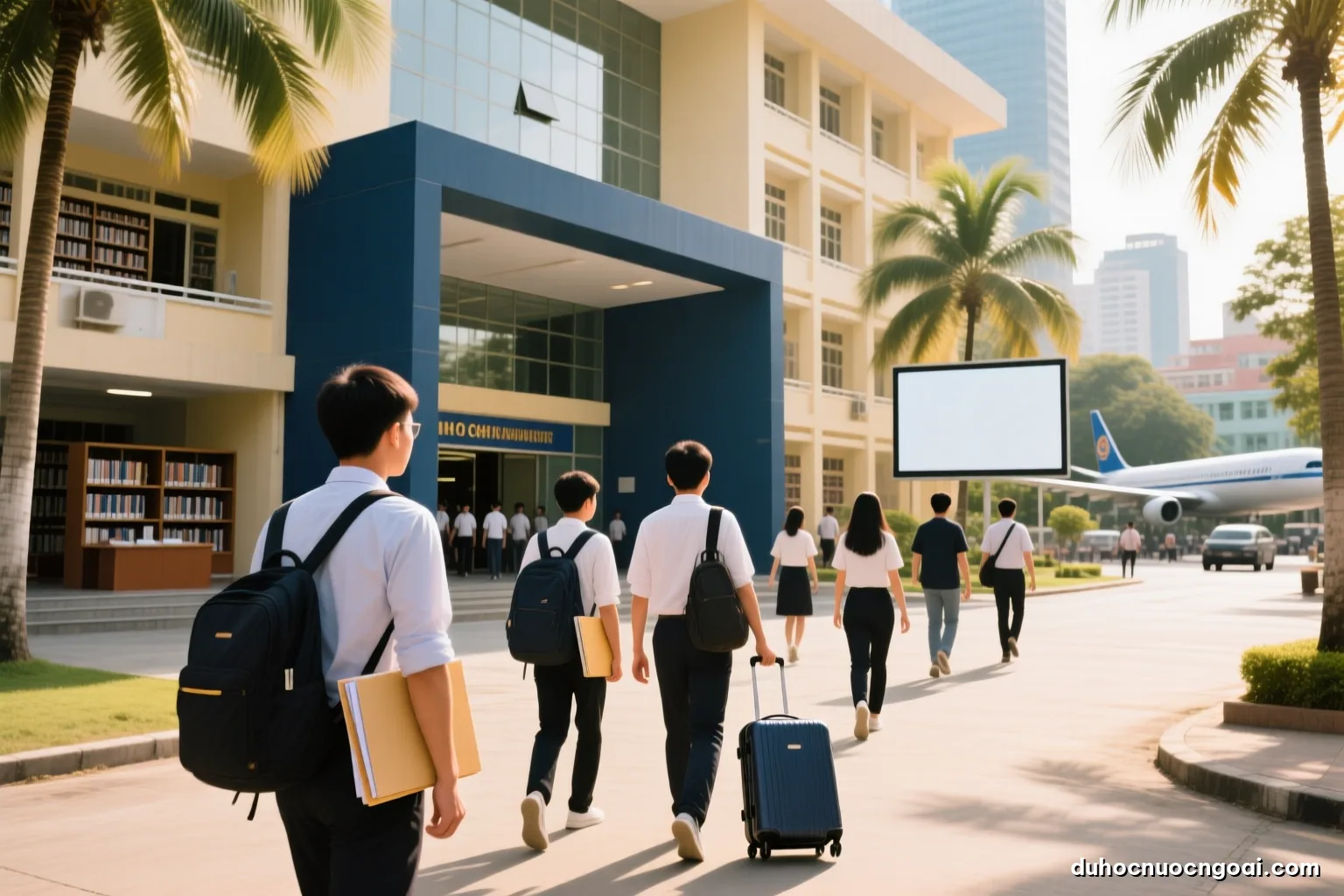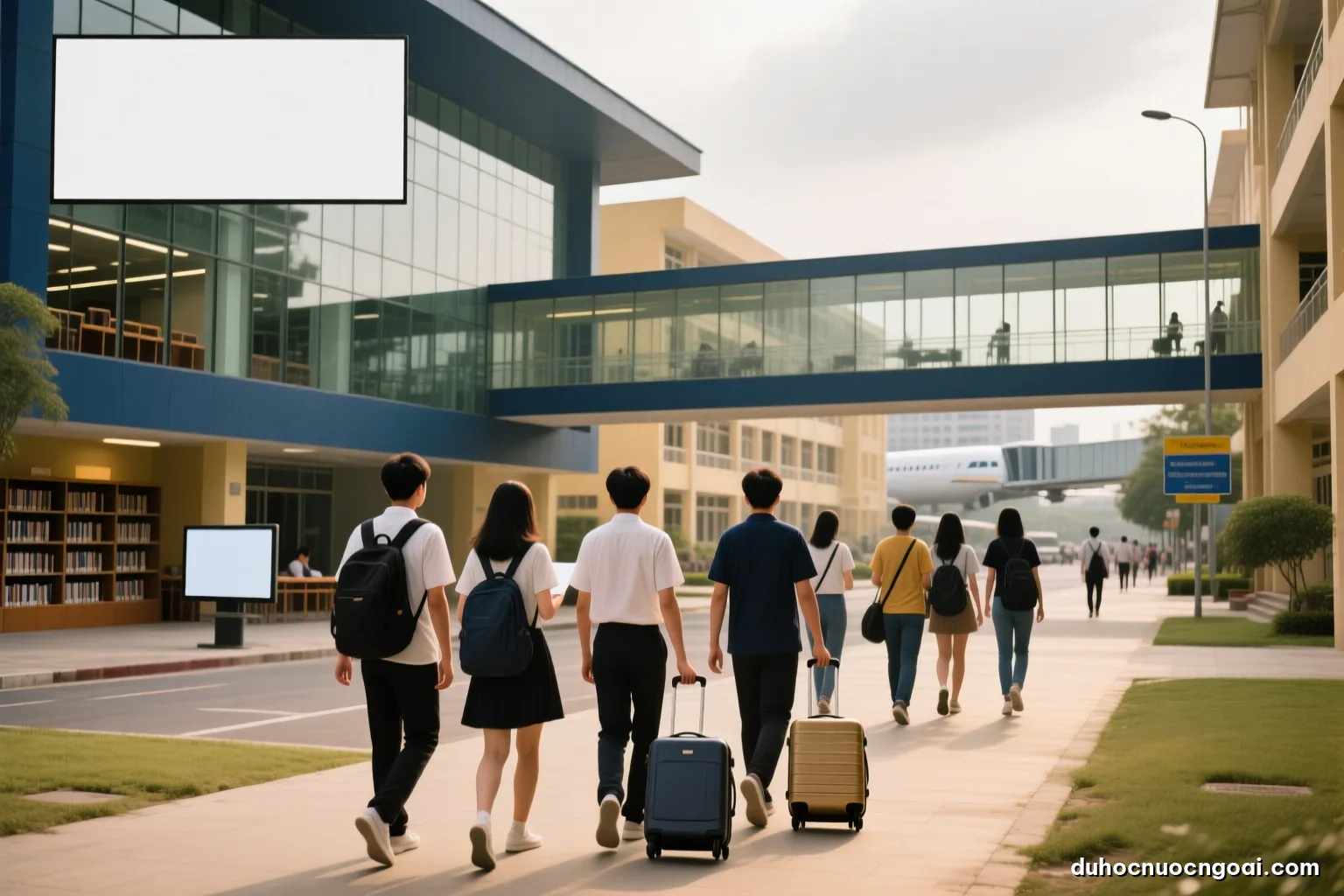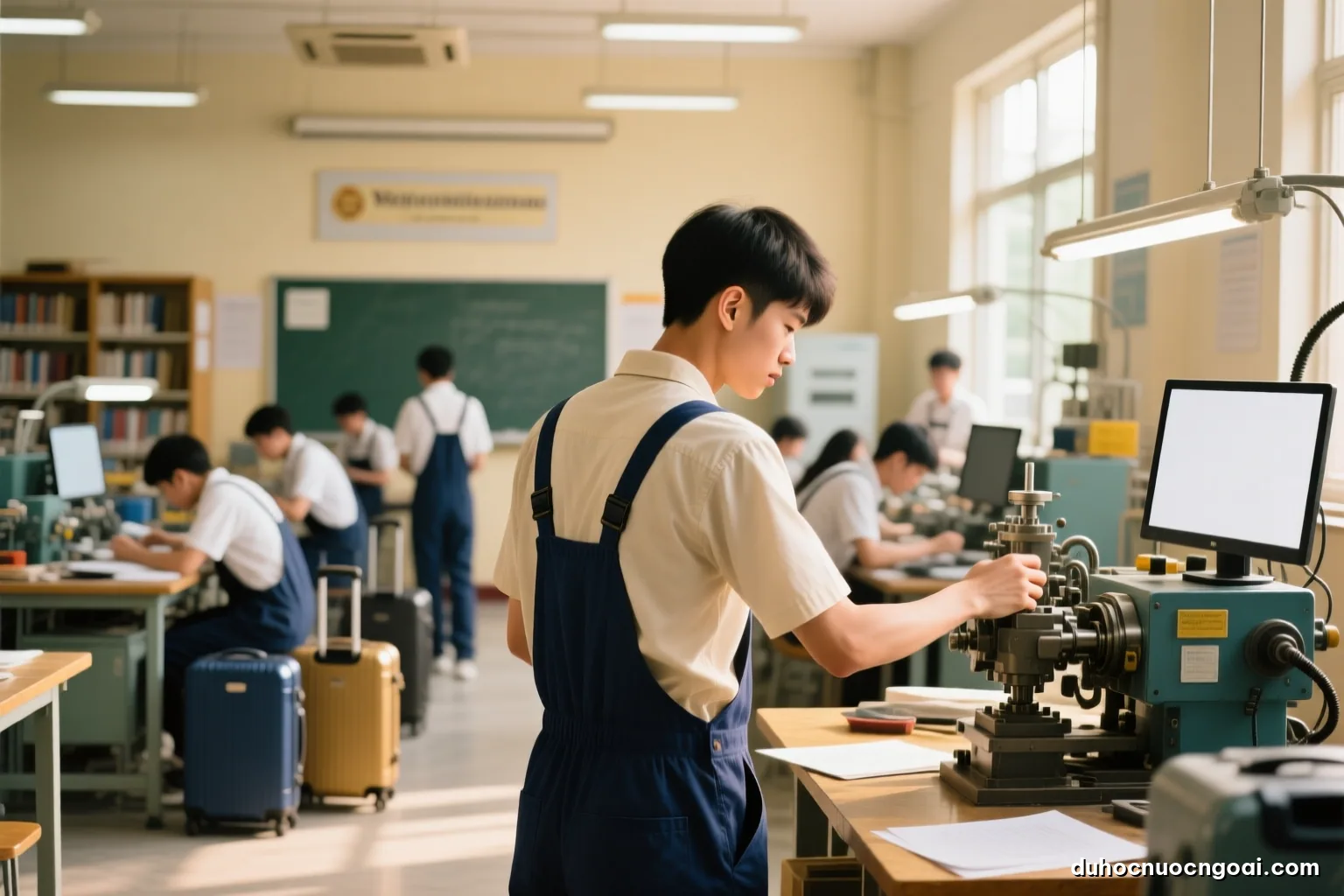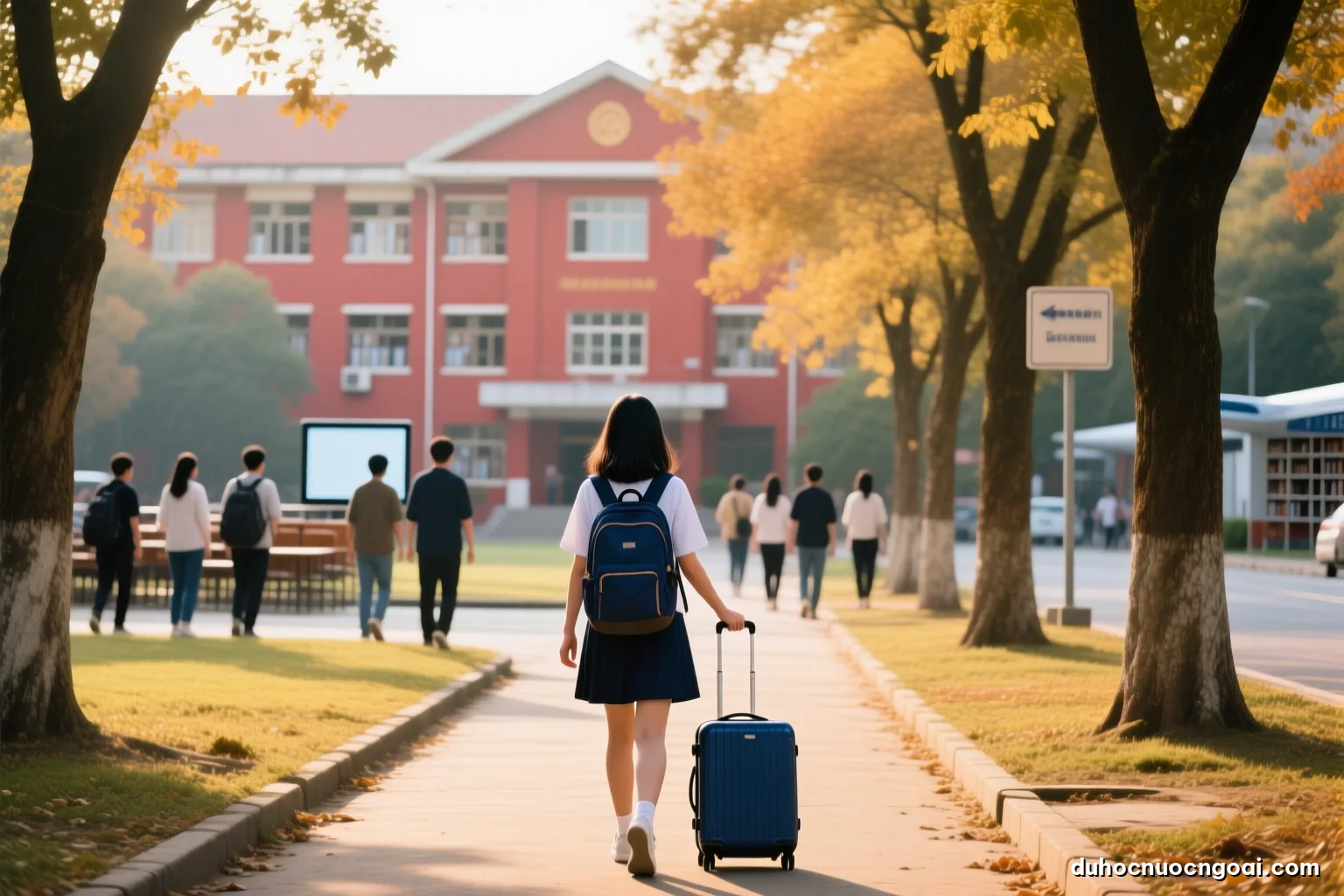
Studying high school abroad means sending a 14–17-year-old to complete upper secondary school in another country, through one of three models: a private boarding or day school, a public school with a programme for international students, or a one-year cultural exchange. For most Vietnamese students the right time is from grade 10 or 11, when they are mature enough to live away from home and still have two to three years to get used to the education system before applying to university.
Unlike university study, high school abroad comes with its own requirements because the student is still a minor: there must be a legal guardian, supervised accommodation, and many countries have a specific visa or rules for students under 18. Below we go through each school model, the rules in the countries Vietnamese students most often choose, how to judge whether your child is ready, and a preparation timeline. Visa rules change from year to year, so always check the official website of that country's immigration authority before applying.
Three models of high school abroad and the core differences
Each model serves a different goal. Choosing the wrong model is the first and most expensive mistake, for example choosing an exchange year when the goal is to graduate in the host country.
| Model | Main goal | Accommodation | Host-country graduation diploma |
|---|---|---|---|
| Private boarding or day school | Complete high school and prepare for university abroad | On-campus boarding house or a homestay arranged by the school | Yes, if the required years are completed |
| Public school accepting international students | Study the state or provincial curriculum at a lower cost than a private school | Homestay arranged by the education department or the school | Yes, if the required years and credits are completed |
| Cultural exchange year | Experience the language and culture for about one school year | A local host family volunteering to take the student in | Usually not, or not guaranteed |
Private boarding schools usually have a high teacher-to-student ratio, a university counselling office and a busy programme of extracurricular activities, but the highest fees. Public schools are cheaper, with larger classes and an environment closer to local life. Exchange years cost the least, but students usually cannot choose the state, the school or the family, and the goal is the experience, not a qualification.
The United States: private schools for F-1, public schools limited to twelve months
The US is a popular high school destination for Vietnamese students, but its visa rules contain a detail many families don't know. A student on an F-1 visa may attend a public secondary school for a maximum of twelve months in total, and must pay the full, unsubsidised per-capita cost of education to the school district. This rule is written into US immigration law, so anyone wanting to complete three or four years of high school on an F-1 visa almost always has to choose a private school, either a boarding school or a day school combined with a homestay.
A US private school can only issue an I-20 once it is certified in the SEVP system. Families should check the school's name on the US government's certified school search tool before paying a deposit. Some schools are built around a particular faith or a specialised programme; this does not affect the visa, but you should understand the school's culture before choosing it.
The second route is an exchange year on a J-1 visa for secondary school students, usually for ages around 15 to 18 and a half, lasting one semester or one year, living with a volunteer local host family. Students cannot choose where they live and usually cannot stay on to continue studying on this visa. The J-1 model suits the goal of gaining experience and improving language skills; it is not a route to an American high school diploma.
The UK, Australia, Canada, New Zealand: specific rules for under-18s
In the UK, students aged 4 to 17 studying at a fee-paying independent school apply for the Child Student visa; students aged 16–17 can choose this visa or the Student visa depending on the programme. The school must be a licensed student sponsor, and most boarding schools require a guardian in the UK to look after the student during half-term breaks, weekends out of school or when something goes wrong. Many families choose a guardianship company accredited by a professional association rather than relying on acquaintances.
In Australia, every student visa holder under 18 must have approved welfare arrangements: either living with a parent or a relative over 21 who holds a student guardian visa, or having the school confirm their accommodation and welfare through a CAAW letter. Public schools in states such as New South Wales, Victoria and Queensland run international student programmes managed by the state education department, with vetted homestays.
In Canada, students who have not reached the age of majority under provincial law (18 or 19 depending on the province) and are not travelling with a parent must have a custodian in Canada, along with a custodianship declaration notarised in both countries. Many public school districts in British Columbia, Ontario, Alberta and Manitoba have international programmes. New Zealand requires schools that enrol international students to follow the government's code of practice on learner welfare; younger students live with approved relatives or in school-managed homestays. In all four countries the application details change from year to year, so read the immigration authority's website before applying.
Signs your child is ready, and signs it is better to wait
Handles daily life on their own. Your child gets up on time, prepares their own things, does their laundry and eats properly without reminders. At a boarding school, nobody follows behind them prompting every small task the way it happens at home.
Asks for help when they don't understand. Students used to waiting for the teacher to assign work often struggle in Western classrooms, where asking questions and joining discussions are part of the grade.
Your child is the one who wants to go. Motivation that comes from within helps them get through the homesick first month. If it is mainly the parents' wish, the risk of the child asking to come home part-way through is much higher.
Emotional stability. Your child can say when they are sad and has ways to regain their balance. If they are going through a psychological crisis or the family has just been through a major upheaval, it is better to wait.
Enough language for everyday communication. They don't need to be as good as a native speaker, but they must be able to talk to teachers and friends when they need help. Many schools test students on entry or place them in English support classes, which can extend the length of study.
The family has a long-term plan. High school abroad almost always leads to university abroad. If the budget only covers high school, your child may end up stuck between two systems if they have to come home part-way through.
A twelve- to eighteen-month preparation timeline for high school abroad
Private boarding schools usually review applications early, and many have deadlines in the winter of the year before entry. The timeline below is a reference framework for an August or September intake:
- January–March of the previous year: the family decides on goals, budget, country and type of school. Have your child read about, watch and talk to students already studying in that model.
- April–June: sit the tests the schools require, such as an English test for secondary students or an entrance aptitude assessment. Draw up a list of about five to eight schools.
- July–September: visit schools in person or online, meet admissions representatives, prepare translated school records, teacher recommendation letters and the student's written pieces.
- October–January: submit applications and attend school interviews. Many private schools interview students directly to assess their maturity.
- February–April: receive results, choose a school, pay the deposit, arrange guardianship and accommodation.
- April–July: receive the school's documents for the visa, apply for the visa, have a medical check, buy insurance, pack and attend a pre-departure orientation.
For public schools in Canada, Australia and New Zealand the process is usually shorter and some accept students for a January or mid-year intake. Even so, good homestay places in popular school districts fill up early, so it is still best to start at least nine months ahead.
Academics and the path to university
High school curricula differ considerably from country to country. American schools award a high school diploma based on credits, with advanced AP classes and possibly IB. British schools teach GCSEs up to year 11 and then A-levels in the final two years, or IB. Australia issues a state-based graduation certificate, Canada a provincial one. Students should join at the start of a cycle, for example at the start of grade 10 in the US or the start of the A-level programme in the UK, so they don't have to catch up on content.
A question parents often ask is what happens if their child has to come home part-way through. The student can apply to have their overseas study results recognised in order to continue at a school in Vietnam, under the Ministry of Education and Training's rules on recognising qualifications and study results, usually handled by the local education department at secondary level. Even so, switching back mid-course is often hard because the curricula don't match, especially in Vietnamese literature, history and geography. Families should have a contingency plan from the start, for example choosing an international school in Vietnam that teaches the same curriculum in case of a return.
In the final year, students apply to university like local students in that country, or apply to another country with an international qualification. A good boarding school has university counsellors who support students from grade 11, helping them choose universities, write essays and prepare for tests. This is one of the greatest values of the boarding model, and it should be a question families ask when comparing schools. If you would like someone to compare school models with you for your child's age and budget, the Global Gate Pass advisory team offers a free first consultation with no obligation.
Frequently asked questions
At what age can a student go abroad for high school?
Many boarding schools accept students from around 13–14, and some countries admit younger students on a specific visa. In terms of maturity, most Vietnamese students are better suited to going from grade 10 or 11. What decides it is not age but independence and having a trustworthy adult keeping a close eye on them.
Can a student on an F-1 visa attend a public school in the US?
Yes, but for a maximum of twelve months in total at public secondary level, and they must pay the full cost of education to the school district. To complete high school in the US on an F-1 visa, students usually have to choose a private school certified to issue an I-20.
Does an exchange year lead to a foreign high school diploma?
Usually not. An exchange year is aimed at cultural and language experience; students cannot choose the school or programme, and a diploma is not guaranteed. If the goal is to complete high school and then go to university in that country, choose a private school or a public school with an international programme.
Is a guardian compulsory for high school study abroad?
In almost every country, students under 18 must have approved guardianship or welfare arrangements. Australia requires the guardian to be a relative over 21 or the school to confirm welfare, Canada requires a custodian with a notarised declaration, and in the UK boarding schools usually require a local guardian.
How does a public school in Canada or Australia differ from a private school?
Public schools follow the provincial or state curriculum, fees for international students are usually lower than at private schools, classes are larger and more diverse, and accommodation is a homestay arranged by the school district. Private schools offer facilities, university counselling and closer personal care, but at considerably higher fees.
What if my child doesn't settle and wants to come home part-way through?
Your child can apply to have their study results recognised to continue at a school in Vietnam, but the curricula rarely match completely. Prepare a contingency plan from the start, for example an international school in Vietnam teaching the same curriculum, and keep a close watch during the first month to spot early signs that your child is not coping.