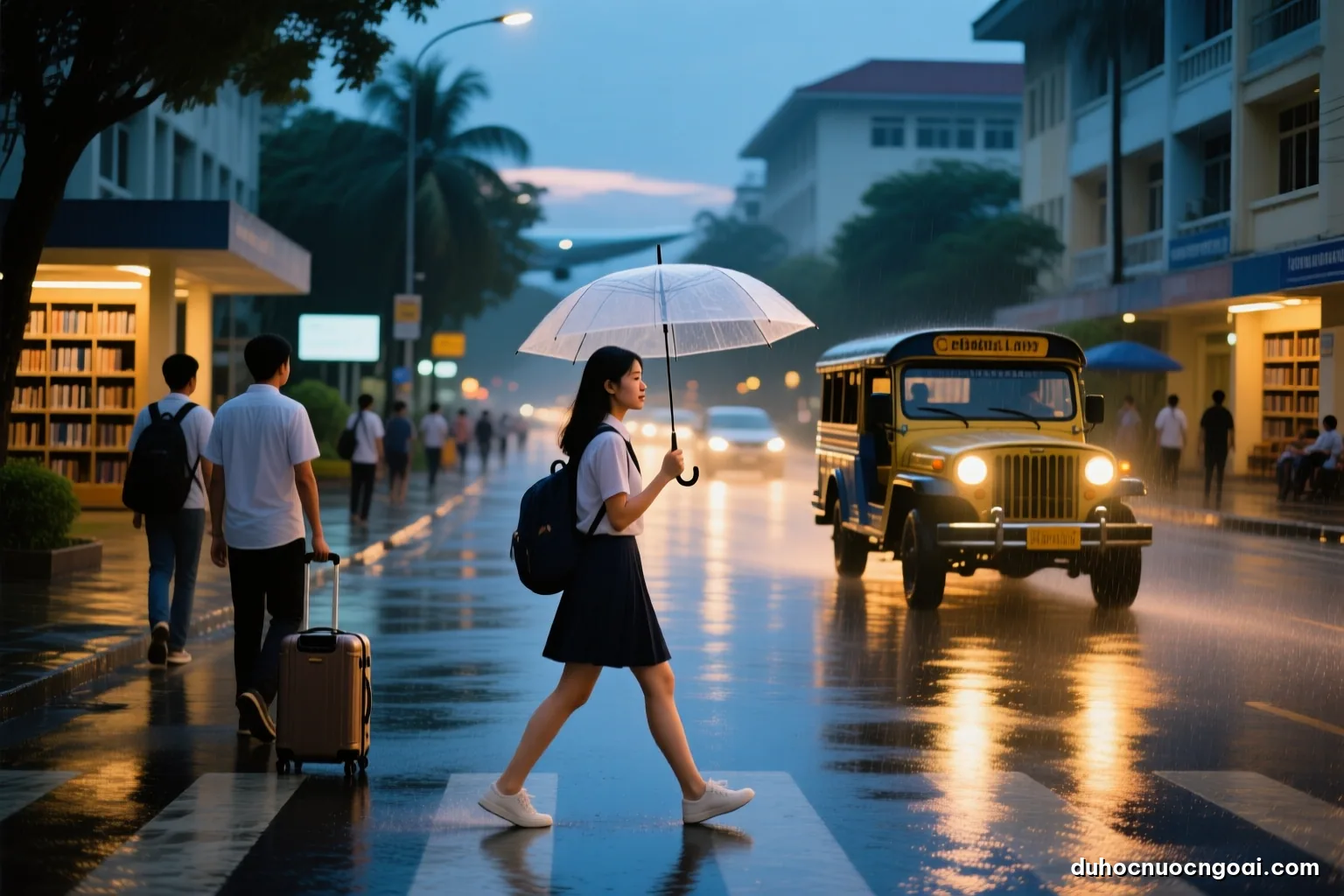
Studying in the Philippines is generally safe for people who live sensibly, but there are five groups of risk to prepare for: tropical diseases such as dengue, natural disasters (typhoons, floods, earthquakes), urban risks such as pickpocketing and scams, legal risks from breaching residence conditions or the very strict drug laws, and the emotional strain of being far from home. Most of these risks can be avoided through simple habits and knowing in advance whom to call when something happens.
This article goes through each group: health and insurance, natural disasters, security and scams, money and daily travel, cultural etiquette, and mental health. The Philippines' national emergency hotline is 911; save this number together with those of the international office, your guardian and the Vietnamese mission in Manila as soon as you arrive.
Health: common risks and how to prevent them
Dengue and mosquito-borne diseases. Dengue is endemic in the Philippines as in Vietnam and rises sharply in the rainy season. Use mosquito repellent, sleep under a net or in a room with screens, and clear standing water around where you live. If you have a sudden high fever, headache and muscle pain, see a doctor early, and do not take painkillers of the kind that can worsen bleeding.
Drinking water and food. Drink bottled water or water from a filter; many dormitories have shared filters. Eat food that is cooked through, and be careful with ice from street stalls. Digestive upsets in the first few weeks are quite common while your body adjusts.
Heat. The hottest months usually fall between March and May. Carry water, avoid long walks at midday and watch for signs of heatstroke.
Vaccinations before you go. Check your vaccination record and ask a vaccination centre which additional shots you should have before studying abroad; universities may require vaccination records, especially for health programmes.
Medicines to bring. Bring enough of any regular medication for the first few months, with a prescription in English. Some medicines that are common in Vietnam may be tightly controlled in the Philippines; ask in advance if you are unsure.
Insurance and medical care
The Philippines has both public and private hospitals. In the big cities, the large private hospitals are of good quality with English-speaking doctors, but they are expensive and usually require a deposit or a guarantee of payment before inpatient treatment. Public hospitals are cheaper but crowded, with long waits. So suitable health insurance is not something to cut back on. Many universities require international students to buy insurance through the university's plan or an equivalent one.
When choosing insurance, read four things carefully: the limits for inpatient and outpatient treatment; the list of hospitals offering direct billing in the city where you live; the exclusions (pre-existing conditions, extreme sports, diving); and the procedure for emergency transport or repatriation. Keep your insurance card, the insurer's helpline number and the claims instructions on your phone.
Most universities have a health clinic for students that handles common problems and refers you to hospital when necessary. Find out where the clinic and the nearest hospital are in your first week, and let a close friend and your guardian know your insurance details. If you are seriously ill, inform the international office so it can help with leave paperwork and contacting your family.
Typhoons, floods and earthquakes: how to prepare
The Philippines lies on the path of Northwest Pacific typhoons and within the Pacific Ring of Fire, so it faces typhoons as well as earthquakes and volcanoes. According to the weather agency PAGASA, an average of about 20 typhoons and tropical depressions enter the country's area of responsibility each year; earthquakes are monitored by PHIVOLCS. The preparation steps below are simple but effective.
- Follow announcements from PAGASA, PHIVOLCS and your university; Filipinos are used to the system of typhoon warning signals, and universities usually suspend classes or move online during strong typhoons.
- Prepare an emergency bag: drinking water, dry food for a few days, a torch, a power bank, medicines, copies of documents in a waterproof pouch, and a little cash.
- Choose accommodation that is not in a low-lying area or right against a steep slope, especially in Manila during the rainy season and in Baguio during the typhoon season.
- Learn how to respond to an earthquake: drop, cover and hold on; take part in the earthquake drills that schools and organisations in the Philippines hold regularly.
- When there is a warning, stay indoors, do not travel outside and do not wade through floodwater; let your family and the international office know you are safe when you can.
- Do not plan beach trips, hikes or inter-island boat journeys when a typhoon warning is in force; vessels may be stopped from sailing on the coast guard's orders.
Natural disasters are part of life in the Philippines, and people and schools there are experienced in responding to them. What matters for international students is not to be complacent and always to have a way of contacting their family.
Urban security and scams targeting international students
Pickpocketing and snatch theft. Common in crowded places such as trains, markets and jeepney stops. Wear your backpack on your front in crowds, do not hold your phone carelessly by the roadside, and split your money between several places.
Travelling at night. Use ride-hailing apps that record the journey instead of flagging down unknown vehicles, travel in groups and avoid deserted streets. Do not accept drinks from strangers and keep an eye on your glass.
Housing scams. Someone claiming to be a landlord on a listings site who asks for a deposit before you have seen the room is a familiar scam. Only pay a deposit after viewing in person or through a channel recommended by the university.
People impersonating the authorities and "fixers". The Philippine Bureau of Immigration has repeatedly warned about brokers claiming they can speed up visas or extensions. Every procedure is done at the official office or through the university; do not hand your passport or money to strangers. A threatening call saying "there is a problem with your residence file, transfer money now" is a scam.
Drugs and breaking the law. The Philippines' drug laws are very strict. Do not carry luggage for other people or accept parcels of unknown origin. Breaching residence conditions, such as working without permission, can also lead to deportation.
Areas under travel advisories. Some areas of Mindanao are covered by travel restriction advisories from many countries. Check the advisories before every long trip and tell your university your itinerary.
Money, SIM cards and getting around every day
The currency is the Philippine peso. International bank cards work at cash machines and many large shops, but markets, jeepneys and small eateries mostly take cash or e-wallets. E-wallets and QR-code transfers are very common in the Philippines; international students can usually open an account once they have their ACR I-Card. For tuition and rent, families should transfer through official bank channels, keep the receipts, and include transfer fees and exchange-rate differences in the budget.
Since 2022 the Philippines has had a law requiring SIM card registration with identity documents; foreigners register with their passport and residence documents as prescribed. Unregistered SIMs are blocked. Buy your SIM at an official shop at the airport or a shopping centre so you can be shown how to register it straight away.
Getting around the city relies on jeepneys, buses, motorised tricycles on small streets, the elevated railway in Metro Manila and ride-hailing apps. Traffic in Manila and Cebu is congested at rush hour, so allow extra time for classes and appointments. Travel between islands is by domestic flight or boat; check the weather before every boat trip.
The first two weeks: a list of things to do right away
The first few days are when you are most easily scammed and also when you set up safe habits. The list below brings together small tasks that prevent most later trouble.
- Buy and register an official SIM; save the emergency number 911, the international office, your guardian, the Vietnamese mission and your insurer's helpline.
- Walk around your accommodation and the campus in daylight: the health clinic, the nearest hospital, a pharmacy, a supermarket, and a cash machine inside a guarded building.
- Complete the ACR I-Card procedure as your university instructs, and photograph every receipt.
- Photograph your passport, visa and insurance card, keep the scans on your phone and send a copy to your family.
- Attend the international student orientation; this is where the university explains the rules, local security and support channels.
- Ask your roommate and senior students which areas to avoid, what a reasonable fare is and where to shop reliably.
- Agree with your family on a regular weekly time for calls and how you will let them know you are safe in a typhoon or emergency.
Most of the tasks on the list take only a few minutes each. Done within the first two weeks, they give you a foundation to concentrate on your studies instead of dealing with incidents.
Cultural etiquette, culture shock and mental health
Filipinos are generally friendly and hospitable, value family and show courtesy to older people; in Filipino, the words "po" and "opo" are added to sentences to show respect. Blunt criticism in front of others easily causes loss of face; giving feedback privately and gently usually works better. Timekeeping in social life can be flexible, but at university, timetables and deadlines are strictly enforced. The Philippines has many long public holidays, especially at the end of the year, when cities are crowded and travel prices rise.
Culture shock in the Philippines is usually milder than in the West, but homesickness, the pressure of studying in English, money worries and feeling out of place in the first months are still real. Signs to watch for include prolonged sleeplessness, skipping meals, not wanting to go to class and withdrawing from friends. Most universities have a counselling and guidance office with trained staff; going there early is a sensible step, not a sign of weakness.
Families in Vietnam can help with regular calls that do not try to control, listening more than pushing, and reminding their child that changing direction is normal. Connecting with the Vietnamese student community at the university while also making friends with local students is a good balance. If your family would like support during the stage of mental and practical preparation before departure, the Global Gate Pass advisory team in Ho Chi Minh City (TP.HCM) takes bookings; the first session is free.
Frequently asked questions
What is the emergency number in the Philippines?
The national emergency hotline is 911, for medical emergencies, fires and the police. You should also save the numbers of the university's international office, your guardian, your insurer's helpline and the Vietnamese mission in Manila. Keep them in your contacts and on paper in your wallet.
Is insurance compulsory for international students in the Philippines?
It depends on the university and the type of residence status; many universities require international students to buy insurance through the university's plan or an equivalent one. Even when it is not compulsory, insurance is strongly advisable because private hospitals usually require a deposit for inpatient treatment.
Should I go home to Vietnam during the typhoon season?
There is no need to go home just because it is typhoon season. Universities usually suspend classes or move online on days with strong typhoons, and life returns to normal afterwards. What you need to do is prepare an emergency bag, choose safe accommodation, follow the announcements and avoid the sea and boat trips when there are warnings.
How can I recognise scams impersonating the immigration authority?
Government agencies do not phone demanding an immediate money transfer to "resolve your file". All residence procedures are done at official offices or through the university. If you receive a suspicious call or message, hang up and check with the international office before doing anything.
Are there restrictions on bringing medicines from Vietnam to the Philippines?
Personal medication in reasonable quantities with an English prescription usually causes no problems. Some active ingredients are tightly controlled, especially sedatives and strong painkillers; ask in advance if you are unsure, and do not carry medicines for other people.
What should female international students bear in mind about safety?
The general principles apply to everyone: live near the university, use rides that record the journey, travel in groups at night, watch your drink, and share your location with a close friend. Universities usually have a student support office and a channel for reporting harassment; save this information in your first week.