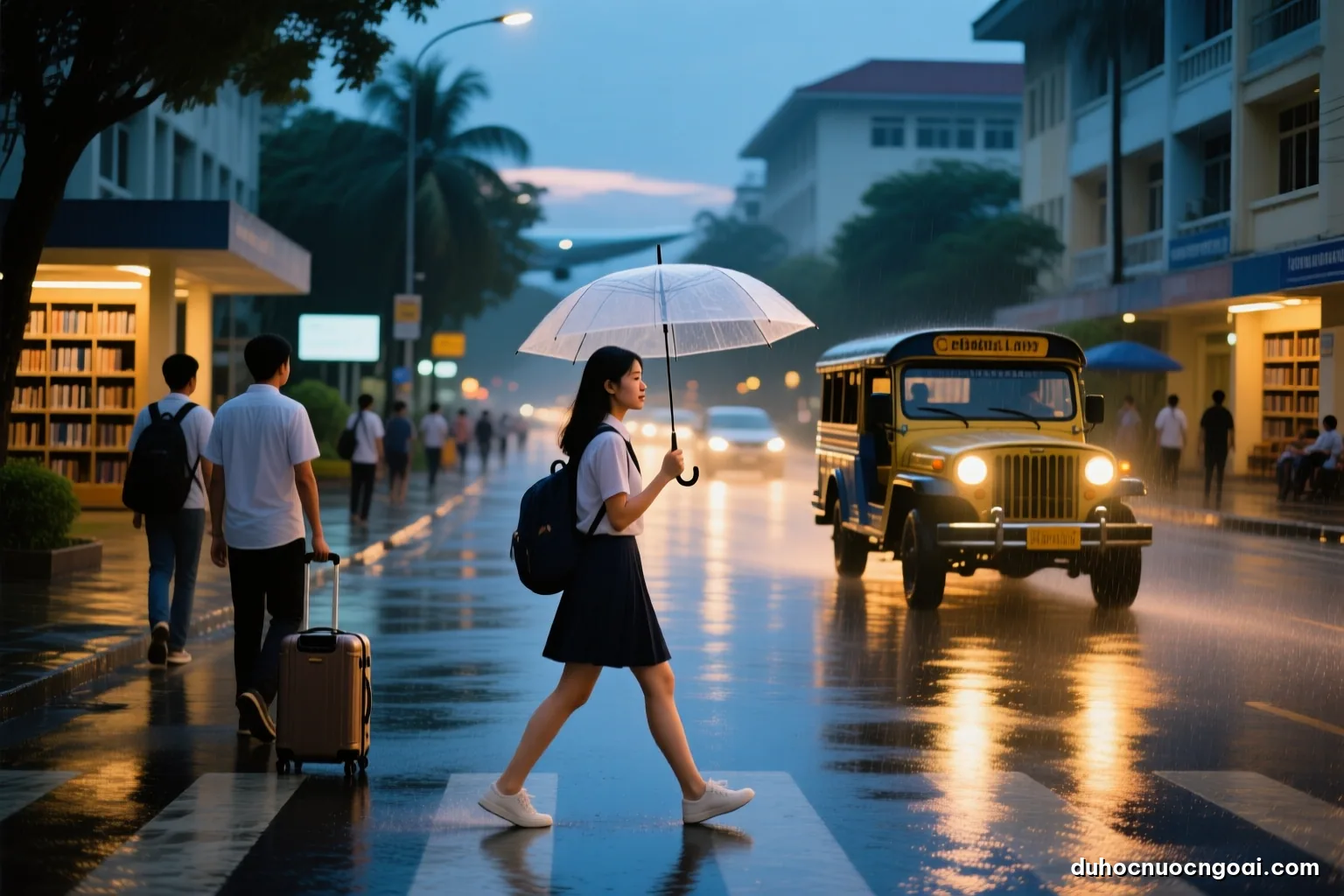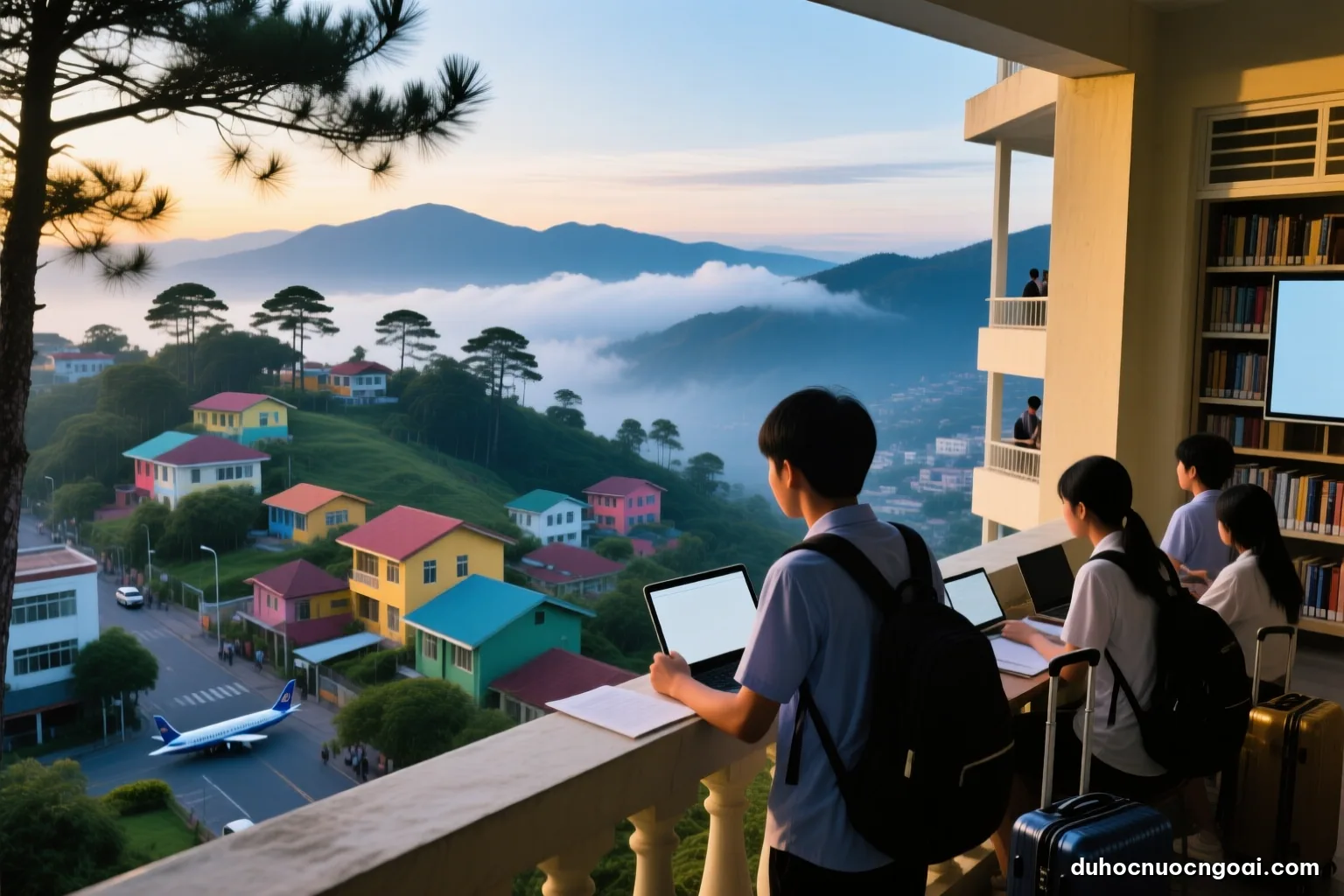
Choosing a city to study in the Philippines should come after choosing your subject and university: Metro Manila has the largest universities and the widest choice of health, business and engineering programmes; Cebu balances a large city, an international airport and lower costs; Baguio, in the mountains, is cool all year with a student pace of life and suits those who need to concentrate; Iloilo and Dumaguete are small university cities with comfortable costs and a slow pace; Davao in Mindanao is orderly but requires you to follow the region's security advisories.
Each city differs in local language, climate, transport, rents and how used it is to international students. This article goes through each place using stable information, then brings it together in a comparison table and a series of questions for families to filter with. No city is best for everyone; there is a city that suits your subject, personality and budget.
Metro Manila: the most universities and the fastest pace
Metro Manila (the National Capital Region) is made up of 16 cities and one municipality, with a population of about 13.5 million according to the 2020 census. The large universities are concentrated in a few clusters: the "University Belt" in Sampaloc and its surroundings in the City of Manila, home to the University of Santo Tomas and many others; the Katipunan cluster in Quezon City with Ateneo de Manila and UP Diliman; and Taft Avenue with De La Salle. Business districts such as Makati and Bonifacio Global City in Taguig have many modern apartments but high rents.
Manila's advantage is choice: many universities, many programmes, large hospitals for medical and nursing students' clinical practice, an international airport with direct flights to Hanoi and Ho Chi Minh City, and the Vietnamese mission is based here. The drawbacks are heavy traffic, local flooding in the rainy season, polluted air along the main roads and the highest housing costs in the country. Getting around relies on the LRT and MRT elevated railway lines, jeepneys, buses and ride-hailing apps.
Practical advice for students in Manila: live near your university, the closer the better, because ten kilometres in Manila at rush hour can take more than an hour. Student boarding houses around the big universities are very well developed, and many buildings have security and shared rooms. Studying in Manila suits those who like big cities, need an in-depth specialist environment and can cope with a noisy pace of life.
Cebu: the second-largest city, with the sea and an international airport
Metro Cebu is the Philippines' second-largest urban area and the economic and educational centre of the Visayas. Mactan-Cebu International Airport is on Mactan Island and connects the city with many destinations in the region; depending on the period, there are direct flights to Vietnam or you must connect through Manila. The local language is Cebuano, but English is widely used in schools, shops and offices.
Cebu has long-established universities such as the University of San Carlos and UP Cebu, together with many private universities strong in engineering, information technology, business and hospitality and tourism. The IT and outsourcing sector is well developed, and the coastal resorts are a natural place for tourism students to do internships. Living costs are generally lower than in Manila, although the city centre and new apartment districts are not cheap either.
Cebu's drawbacks are that city traffic also jams at rush hour, and that typhoons pass through the region in the rainy season. Cebu suits those who want a city large and well-equipped enough but gentler than Manila, who like the sea and need an international airport nearby.
Baguio: the summer city in the mountains
Baguio lies in the Cordillera mountains in the north of Luzon, at an altitude of about 1,500 metres, and is called the "summer capital" of the Philippines because of its cool climate all year round, much cooler than the lowlands. By road from Manila it takes about four to six hours depending on the route and traffic; the city is not served by regular commercial flights, so going home to Vietnam usually means travelling down to Manila or Clark.
Baguio is a true student city with universities such as Saint Louis University, UP Baguio, the University of the Cordilleras and the University of Baguio. The atmosphere is studious, the pace of life slower, there are fewer urban distractions, and living costs are usually lower than in Manila. Common languages include Ilocano and Tagalog, and English is widely used. The surrounding mountains have the cultures of the Cordillera indigenous peoples, rice terraces and well-stocked produce markets.
Worth knowing: Baguio's rainy season is very wet, and typhoons can cause landslides that cut the mountain roads for a few days. Homes do not need air conditioning, but you need warm clothes for the cold months and misty nights. Baguio suits those who need to concentrate on their studies, like a cool climate and do not mind a small city and mountain roads.
Iloilo and Dumaguete: small university cities with a slow pace
Iloilo in Western Visayas is a city with many long-established universities, including private institutions such as Central Philippine University and the University of San Agustin and the public West Visayas State University; the UP Visayas campus is in Miagao, about an hour from the city. The local language is Hiligaynon. The city is known for its relatively clean streets, the riverside esplanade along the Iloilo River, rich local cuisine and comfortable living costs. Iloilo has an airport with frequent domestic flights to Manila.
Dumaguete on Negros Island is a small coastal city, famous for Silliman University and called by Filipinos the city of gentle people. Students make up a significant share of the population; the pace of life is slow, costs are low, and diving spots and small islands are close by. In exchange, the choice of universities and programmes is narrower, and travel home to Vietnam always means connecting through Manila or Cebu.
These two cities suit those who like quiet, have a moderate budget and study fields the local universities do well, such as nursing, education, marine science and business. They do not suit those who need a wide choice of specialisms, like a big-city pace of life or need to go home frequently.
Davao and Mindanao: orderly, but follow the advisories
Davao is the largest city in Mindanao, large in area and known for strict city regulations such as a ban on smoking in public places, and many people regard it as orderly. The city has universities such as Ateneo de Davao, the University of Mindanao and UP Mindanao, and lies in a region less often hit directly by typhoons than the north and centre of the Philippines. Living costs are lower than in Manila.
However, some areas of Mindanao, especially the southwestern provinces and the Sulu archipelago, are covered by travel restriction advisories from many countries for security reasons. Advisories can change; before choosing any university in Mindanao, read the travel advisories of Vietnam's Ministry of Foreign Affairs and a few other countries, ask the university about the actual situation and its safety policy for international students, and limit travel to areas under advisories.
Mindanao is not a default choice for Vietnamese students, but it should not be ruled out out of prejudice either. For those with a specific reason, such as tropical agriculture or a suitable programme, Davao can be a good place to study if the family follows the advisories seriously.
Accommodation: dormitory, student boarding house or apartment
University dormitories. The safest option for the first year and for younger students: managed, with set hours, close to classes. Places for international students are usually limited, so apply as soon as you have your acceptance letter. Ask whether the dormitory stays open during the breaks, because some close for the summer.
Student boarding houses around campus. In Manila, there are many buildings for students around the big university clusters, with single or shared rooms, usually with security and curfews. In Baguio, Iloilo and Dumaguete, family-run boarding houses are more common. Before paying a deposit, view the place in person or ask someone you know to view it, and ask how electricity is charged, because electricity in the Philippines is expensive and air conditioning pushes bills up sharply.
Condominium apartments. More comfortable and private, suiting graduate students or several people sharing. Contracts usually require a deposit and several months paid in advance; read the deposit refund and service charge terms carefully. In business districts such as Makati, BGC or central Cebu, rents are much higher than around the universities.
General principles in every city. Prioritise somewhere near the university, with security and a well-lit, busy route home at night; avoid transferring a deposit through listings sites to someone you have never met; keep your contract and receipts, because the ACR I-Card and residence documents need an exact address.
A quick comparison of six cities
The table below summarises things qualitatively. Costs are relative comparisons between the cities, not figures; rents depend very much on the area and type of accommodation.
| City | Strengths | Climate | Relative cost | Getting home to Vietnam | Suits |
|---|---|---|---|---|---|
| Metro Manila | The most universities, programmes and the largest hospitals | Hot and humid, local flooding in the rainy season | Highest | Direct flights | Those needing in-depth specialisms and liking city life |
| Cebu | Big city, engineering, tourism, the sea | Hot and humid, typhoons | Medium | Direct or connecting | Those wanting balance |
| Baguio | Student city, quiet | Cool all year, very rainy | Low to medium | Via Manila or Clark | Those who need to concentrate |
| Iloilo | Long-established universities, pleasant living | Hot and humid, typhoons | Low | Connecting | Those who like quiet, moderate budget |
| Dumaguete | Silliman, marine science | Hot and humid | Low | Connecting | Those who like small cities |
| Davao | Orderly, fewer direct typhoons | Hot and humid | Low to medium | Connecting | Those with a specific reason who follow the advisories |
After reading the table, answer for yourself: in which city does your subject have a strong university; how much traffic and noise can you tolerate; does your family want to be able to fly over within a day or accept connections; and is your housing budget enough for a safe area near the university? If you would like someone to weigh these factors for your specific case, the Global Gate Pass advisory team in Ho Chi Minh City (TP.HCM) takes bookings; the first session is free.
Frequently asked questions
Which city in the Philippines is safest for international students?
There is no reliable official ranking. University cities such as Baguio, Iloilo and Dumaguete are usually considered peaceful by students; Manila and Cebu have higher urban risks such as pickpocketing and scams. More important than the city's name is choosing safe accommodation near the university and following its guidance.
How does the typhoon season affect studies in the Philippines?
The rainy and typhoon season usually runs from about June to November. During strong typhoons, universities may suspend classes and move online for a few days; transport and electricity may be disrupted. Follow PAGASA and university announcements, and keep water, food and a power bank in stock during this season.
Is it hard to live there without knowing the local language?
In the big cities and at university, English is enough for almost all daily life. Learning a few greetings in Tagalog, Cebuano or Hiligaynon, depending on where you are, makes integrating and bargaining at the market easier, but it is not a requirement.
Do I need warm clothes to study in Baguio?
Yes. Baguio is at an altitude of about 1,500 metres, so it is much cooler than the lowlands, and nights at the end and start of the year are quite cold. A jacket, thermal top and warm blanket are enough. On the other hand, air conditioning is usually unnecessary, saving on electricity compared with Manila or Cebu.
Should I rent an apartment in Makati or BGC when studying in Manila?
Only if your university is nearby. Makati and BGC are modern, safe business districts, but rents are high and they may be far from the big universities in Quezon City or Sampaloc. For students, living near the university usually saves both money and time compared with living in an attractive district.
Is it easy to get home to Vietnam from cities outside Manila?
From Cebu, depending on the period, there may be direct flights or you may need to connect; from Baguio you need to go down to Manila or Clark; from Iloilo, Dumaguete and Davao you usually connect through Manila or Cebu. Families who visit often should factor this extra time and cost into choosing a city.