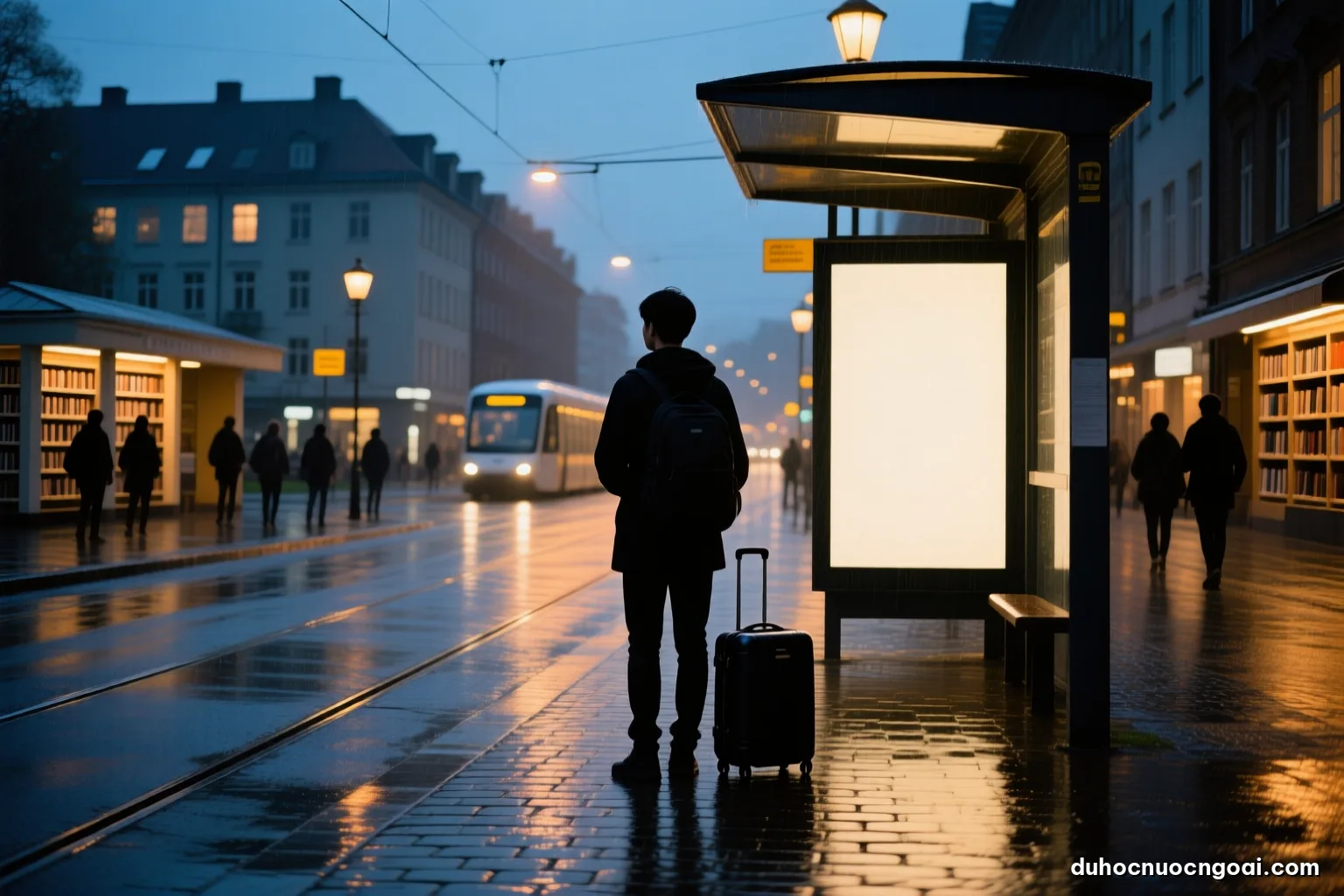
Culture shock is the tiredness, confusion, irritability or sadness that appears when someone lives for a long time in another culture, where the familiar unwritten rules no longer work. For international students it usually arrives after a few weeks or months, once the novelty wears off and study starts to get heavy. It is a normal reaction, not a sign that you chose the wrong country or that you are weak, and most people get through it by understanding how it works, keeping a steady routine and actively making connections.
The term was popularised by the anthropologist Kalervo Oberg in the 1950s, when he described the anxiety of people who lose "all our familiar signs and symbols of social intercourse". Almost seventy years later, that description still fits remarkably well the experience of a Vietnamese student sitting in a seminar in the UK for the first time, going to a German supermarket on a Saturday afternoon or eating lunch alone in an American university cafeteria. This article explains the stages that are usually described, what later research has revised, the specific differences that often trip up Vietnamese students and how to adjust with a plan.
The stages usually described — and why not everyone goes through them in order
The most familiar model divides the experience into four stages. Honeymoon: everything is new and exciting, and differences are seen as interesting. Crisis: differences start to irritate, even small tasks feel hard, you miss home and constantly compare things with Vietnam. Adjustment: you gradually understand the rules, build new habits and regain a sense of control. Adaptation: you live comfortably in both cultures, choosing what to keep and what to learn.
In 1955, the Norwegian sociologist Sverre Lysgaard surveyed Norwegian scholars who had been to the United States and described a U-curve: good adjustment at first, a low point around the middle, and then a rise. Later, the model was extended into a W when the return home was added. The image is easy to remember and useful for knowing that "this dip has a name".
However, later studies following international students over long periods show that the U-curve does not apply to everyone. For many students the hardest stage is actually the first few weeks — when they have to deal with documents, accommodation, language and new ways of studying all at once — with no "honeymoon" at all. Some people go up and down several times with the rhythm of terms, exam seasons and winter. The right way to use the model is as a suggestive map, not a compulsory timetable, and not to worry if you do not feel as excited as you "ought to".
Signs that you are in a difficult stage
Emotional. Getting irritated by small things, finding local people cold or "fake", waves of homesickness, crying for no clear reason, feeling lost even in the middle of a crowd.
Behavioural. Only spending time with Vietnamese friends or only staying in your room, sleeping too much or too little, eating irregularly, spending hours scrolling Vietnamese social media, skipping classes or avoiding group discussions.
Thinking. Constantly comparing with Vietnam along the lines of "at home it isn't like this", doubting the decision to study abroad, feeling inadequate because you cannot keep up with conversations, being afraid of being judged when speaking the foreign language.
Physical. Persistent tiredness, headaches, difficulty concentrating, catching minor illnesses easily. Changes in climate, schedule and food combined with stress make the body react more noticeably.
When it is no longer ordinary culture shock. If feelings of sadness or loss of interest last for weeks, clearly affect your studies, sleep or eating, or if at times you think about harming yourself, that is when you need to see the university's counselling service or a doctor. The article on mental health in this section covers this in more detail.
The differences Vietnamese students stumble on most
Culture shock rarely comes from the big differences you already knew about, such as food or language. It comes from hundreds of small unwritten rules, a little at a time, adding up. The table below brings together the differences Vietnamese students often describe, at a general level — every country, region and university is different.
| Area | Habit in Vietnam | What you often find abroad | A way of thinking that makes it easier |
|---|---|---|---|
| In class | Listen to the lecture, rarely ask questions so as not to bother the teacher | Discussion, debate and, in many places, marks for class participation | Asking and challenging are part of learning, not rudeness |
| Forms of address | Thầy, cô, anh, chị according to age and role | Calling lecturers by their first name in many English-speaking countries; more formal in Japan, Korea and Germany | Watch how others address people and follow suit |
| Communication | Speaking indirectly, keeping harmony, reluctant to refuse outright | Direct in Germany and the Netherlands; tactful but clear in the UK; very indirect in Japan | Direct does not mean rude; indirect does not mean fake |
| Time | Meeting times are flexible | Punctuality is a sign of respect, especially in Germany, Japan and Switzerland | Arriving five minutes early is safe |
| Personal space | Asking about age, salary and family shows you care | Many personal questions are seen as intrusive | Start with studies, the weather, hobbies |
| Shared living | Rubbish goes in one bin, noise is fairly relaxed | Strict recycling, quiet hours in the building | Ask about the house rules from the start to avoid friction with neighbours |
One very common misunderstanding: local people seem friendly at first but then do not suggest meeting up, and the international student concludes "they don't like me". In many countries friendships form slowly, through repeated shared activities — the same club, the same project group, the same sports team — rather than through a few conversations. Patiently returning to the same group for a few weeks usually works better than going to many events once.
Adjusting with a plan: eight things you can do in the first three months
Adjusting is not about waiting for the feelings to pass on their own. There are concrete things that shorten the difficult stage:
- Keep a fixed routine. Regular times for sleeping, eating and studying are an anchor when everything else is new.
- Choose one activity that repeats every week. A club, a sports team, a volunteering group. Meeting the same people many times is the most reliable way to make friends.
- Have friends on both sides. Vietnamese friends keep you from feeling lonely and share practical experience; local and international friends help you understand where you live. Only one side is not enough.
- Ask instead of guessing. When you see behaviour you do not understand, ask a local friend "what does this mean here?" rather than drawing your own conclusion.
- Get off campus. Go to the market, museums, parks, a local sports match. Understanding the city helps you feel less like a guest.
- Cook a familiar dish. Familiar food is a cheap and effective way to soothe your feelings. Inviting your flatmates to try it is also a natural way to start a conversation.
- Limit time spent scrolling news from home. Keeping in touch with your family is good; living half your life in Vietnam through a screen slows down adjustment.
- Keep a short journal. Three lines every evening: what was hard, what you learned, what made you happy. Looking back after a month, you will see how far you have come.
The international student offices of many universities run friendship programmes, buddy schemes with older students and language exchange sessions specifically for newcomers. Sign up right from orientation week, when everyone is looking for friends.
Winter, holidays and the second waves
Many international students feel fine after their first term and then suddenly slump in winter. In high-latitude countries such as the UK, Germany, the Netherlands, the Nordic countries and Canada, winter days are very short, it gets dark in the afternoon, and it is cold and damp. Lack of light affects many people's sleep and mood. Getting outside when it is sunny, exercising regularly, keeping your sleep schedule and talking to a doctor if your mood drops noticeably with the season are all worth doing.
Lunar New Year (Tết) is another wave. In most countries it falls in the middle of term, nobody has a holiday, while the whole family in Vietnam is gathered together. Preparing in advance helps a lot: Vietnamese student associations in many cities organise Tết celebrations, and you can invite international friends to wrap bánh chưng and cook Tết dishes together. Turning a homesick day into a chance to introduce your own culture is how many people get through it more easily.
Finally, after finishing their studies and returning home, many people experience "reverse culture shock": feeling out of place in their own home, being bothered by things that used to be familiar, finding it hard to explain to relatives what they have been through. Knowing in advance that this may happen helps you and your family be more patient with each other in the first few months after your return.
How the family at home can help
When their child calls home complaining of being tired, criticising the food or describing an annoying flatmate, many parents' reflex is to worry and give advice straight away: "come home", "keep trying", "why won't you fit in?". During the crisis stage, what a child usually needs is to be listened to and to hear that the feeling is normal. A line like "lots of students go through this stage — tell us more" works far better than a lot of advice.
Parents can suggest that their child turn to the university's support services — academic advisers, the international student office, the counselling service — without making that seem like a sign of failure. Agree on regular but not too frequent call times, so your child has space to build a new life. And if you see serious warning signs, such as your child missing classes for many days, being unreachable or saying hopeless things, contact the university through the emergency contact point it provides for families.
Preparing mentally before the flight is as important as packing. When advising families, the Global Gate Pass team usually spends part of the meeting talking about the first months and how the family can support their child, because a smooth path through study begins with knowing in advance what you will face.
Frequently asked questions
How long does culture shock usually last?
There is no fixed length. For many people the hardest stage falls in the first few months and eases during the first year once they have a routine and friends. Some people feel ups and downs every term. If after several months things are getting worse rather than better, you should turn to the university's counselling service.
Will I get culture shock studying in an Asian country close to Vietnam?
Yes, and sometimes it is even more surprising because people do not prepare for it. Japan, Korea and Singapore have codes of conduct, academic pressure and ways of communicating at part-time jobs that are very different from Vietnam, even if they look close on the surface. Similarities in food or appearance do not replace learning the unwritten rules.
Does spending time mostly with Vietnamese friends slow down integration?
Vietnamese friends are a valuable source of support, especially in the first months, and there is nothing wrong with keeping them. The problem only arises when they are your only group, so you use the foreign language less and understand less about where you live. Balance it by keeping at least one weekly activity with international or local friends.
Can culture shock affect academic results?
It can, because it reduces concentration, sleep and motivation just when you have to get used to a new way of studying. Many universities understand this and have academic advisers, study skills centres and mentoring programmes for first-year students. Telling your adviser early when you feel yourself falling behind makes it easier to deal with before exam season.
How can I prepare before I fly to reduce culture shock?
Read about the codes of conduct of your destination, talk to students who are studying there, read the orientation materials the university sends carefully, and practise listening and speaking in everyday situations such as ordering food, asking for directions and calling an office. Knowing in advance that there will be a difficult stage is also a form of preparation.
How should I deal with reverse culture shock when I return home?
Give yourself a few months, keep in touch with your international friends, find a community of people who have also returned from studying abroad, and use what you learned to do meaningful work at home. Telling your family that you need time to readjust helps avoid misunderstandings on both sides.