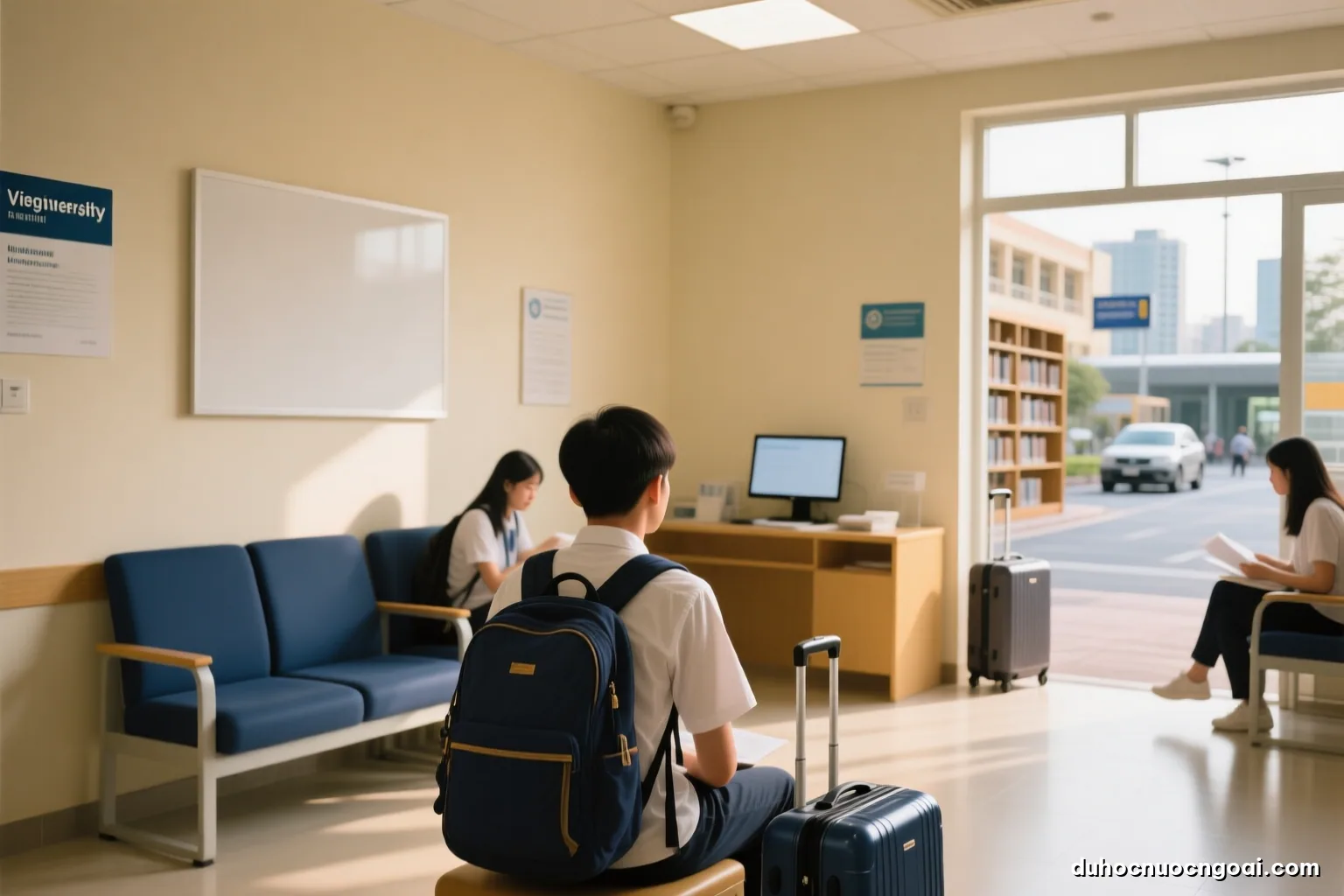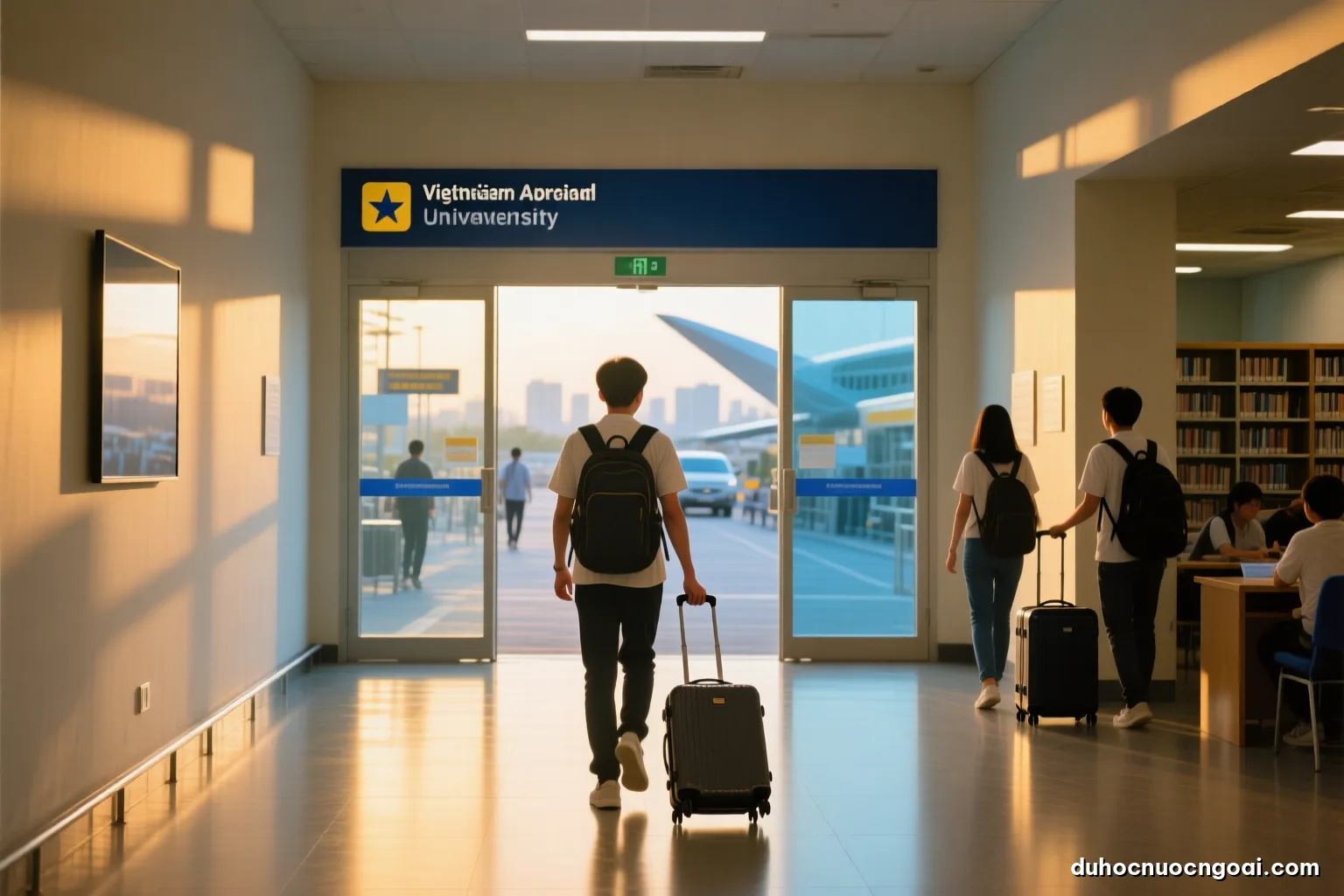
Your first week in your study abroad country has four tasks with real deadlines: getting through border control with complete documents and checking that your entry record shows the correct student status; checking in with the international student office and attending orientation week; registering your residence or collecting your residence card if the country requires it; and setting up the three things you need to live — a phone number, a bank account and health insurance that is already in force. Everything else — shopping, getting to know the city, looking for a part-time job — can wait a few more days.
Many students spend their first week on whatever is right in front of them, like buying things or going out with new friends, and then miss the check-in or residence registration deadline. These deadlines are not box-ticking: in some countries, failing to check in with your university on time can affect your visa status; in others, if you have not registered your address you cannot open a bank account or get a tax number to work part-time. This article puts the tasks in chronological order, with notes on how the popular destinations differ.
Day 0: at border control and the airport
Keep your documents in your hand luggage, not your suitcase. Passport, visa documents or approval letter, offer letter, financial and insurance documents, and the address where you will stay. Border officers may ask which university you are attending, what you are studying, where you will live and who is paying — answer briefly, accurately and consistently with your application.
Check your entry record before you leave the desk. In the US, the I-94 entry record is electronic and can be downloaded from the border agency's website after a few days; check that it shows F-1 status and that the period of stay reads "D/S". In Canada, the study permit is issued and printed at the port of entry — read the conditions on it carefully before leaving the counter, because mistakes are much easier to fix on the spot. In Japan, the residence card is usually issued right at the major airports; this is also when you can apply for permission to work part-time.
Declare honestly at customs. Food, medicine and cash above the threshold must be declared. Declaring and being inspected is normal; hiding something and being caught is what turns into a serious problem.
Plan the route to your accommodation in advance. Many universities run an airport pick-up service for new students at the start of term, which must be booked ahead. If you are travelling on your own, note down the train or bus route or the official taxi rank. Avoid accepting rides from strangers who approach you in the arrivals hall.
Let your family know you have arrived. Free airport Wi-Fi is enough to send an "I've landed" message. There is no need to buy a SIM card at the airport — prices there are usually higher than in the city.
Days 1–3: checking in with your university and orientation week
The international student office is the first place you must go. Staff check your passport, visa and entry record and update your file in the university's system — in the US, this is the step that activates your SEVIS record, and it must be done before the deadline your school gives you. In Australia, visa conditions require students to give their university their address within a short time of arrival and every time it changes. In the UK, the university checks your enrolment documents and your eVisa status. The check-in schedule is usually in an email sent before you fly — read it again once you have arrived.
Orientation week (called orientation, welcome week or freshers' week depending on the country) is not a week off. This is when the university explains academic regulations, academic integrity, how to use the online learning system, course registration, and its counselling, health, housing and careers services. Many of the questions you will have during your first year are already answered in these sessions. The sessions specifically for international students are especially worth attending, because they cover visa conditions, permitted working hours and the mistakes that cost students their right to stay.
This is also the week to get your student card, university email account and system passwords, and — if you have not done so yet — to register for your first-semester courses. Some courses have a limited number of places; a few days' delay can mean waiting until next semester or choosing a substitute course. If your programme has an entry test for language level or mathematics, it usually falls in this week.
Residence registration: what each country requires in the first weeks
This is the part that differs most between countries, and also the part most often forgotten because nobody reminds you in person. The table below summarises the principles; specific deadlines and procedures must be checked on the government agency's website or in your university's guidance.
| Country | What you must do after arrival | Why it matters |
|---|---|---|
| Germany | Register your address (Anmeldung) at the citizens' office within about two weeks of moving in; then apply for a residence permit at the foreigners' authority before your entry visa expires | Without an address registration it is hard to open a regular bank account, you cannot get a tax ID, and you cannot extend your residence |
| Japan | Report your address at the city or ward office within fourteen days of having a place to live; enrol in National Health Insurance at the same time | The address is printed on your residence card; you need it for a bank account, a SIM card and part-time work |
| South Korea | Complete alien registration to receive a residence card within 90 days of entry | The residence card is needed for many banking, phone and part-time work services |
| UK | Police registration no longer exists; you manage your eVisa through an online account and update your passport and address when they change | The eVisa is your proof of the right to stay when you work part-time, rent a home or re-enter the country |
| US, Canada, Australia | No household-style residence registration; report your address to your university or its system as your visa rules require | A wrong address can mean missing important letters and breaching your visa conditions |
In countries with residence registration, appointments at citizens' offices or immigration authorities in big cities can be booked up for weeks. Book as soon as you have an address, and ask the international student office whether the university helps new students do the paperwork as a group — many universities in Germany and Japan do this.
Days 3–7: phone number, bank, insurance, transport
Once your documents are in order, it is time for the things that let you get through daily life. A sensible order is usually SIM card first (because banks need a local phone number), then the bank, then the other service cards.
- SIM card: a prepaid plan is a safe choice for the first month, with no need to sign a long contract yet.
- Bank account: bring your passport, proof of enrolment and proof of address; some banks have packages specifically for international students.
- Health insurance: activate your card, download your insurer's app and find the nearest clinic. In the UK, register with a family doctor (GP) near where you live in your first week — do not wait until you are ill.
- Transport card: many cities offer discounted monthly passes for students, which require a student card or proof of enrolment.
- Tax number and social security number if you plan to work part-time: depending on the country, you can apply straight away or only once you have a job.
- The library, gym and university health centre: walk around once so you know where they are.
A practical tip: keep a table recording the reference numbers, the names of the people you met and the appointment dates for each procedure. In your first week you will receive dozens of emails and pieces of paper; a single summary helps you avoid missing any deadline.
Small things that make the first week easier
Handle jet lag with a plan. If you arrive in the morning, try to stay awake until evening local time and get outside so your body can adjust. Arriving in Europe or the Americas is usually more tiring than arriving in Asia because of the bigger time difference.
Walk the route to class before your first lesson. Large campuses, abbreviated building names, lecture halls in basements — one trial walk saves you from being late on day one.
Talk to the person sitting next to you. In the first week everyone is new and everyone wants to know someone. This is the easiest time of the whole year to make friends; after a few weeks, groups have already formed.
Find the Vietnamese student association, but do not stay only inside it. The Vietnamese student association at your university or in your city can help with a lot of practical things, from where to buy food from home to experience with paperwork. But if you only meet Vietnamese people in your first week, you miss the chance to get to know international classmates while everyone is at their most open.
Do not spend in "just arrived" mode. In the first days, costs add up very quickly: household items, eating out, transport. Write down what you spend in the first week so you know your real budget, rather than relying on the spreadsheet you made at home.
When something goes wrong in the first week
Lost luggage, accommodation that does not match its description, a Vietnamese bank card blocked because of overseas transactions, falling ill from exhaustion and the change of climate — these things happen more often than you might think, and all of them can be dealt with. The key is knowing whom to ask. The international student office is the first stop for anything to do with the university and documents; the housing office for accommodation; the university health centre or your insurer's advice line for health.
For bank cards, call your bank in Vietnam before you leave to tell them your travel plans so the card is not blocked, and bring two cards from two different banks. In a genuine emergency — an accident, an assault, a fire — call the local emergency number first, then tell your university and your family. If you lose your passport, report it to the police to get a written report, then contact the nearest Vietnamese Embassy or Consulate General to get replacement documents.
At the end of the first week, set aside an evening to review: have the compulsory tasks been done, which deadlines are still pending, and how does your actual first-week spending compare with what you expected? This review lets you start week two with a clear list instead of a feeling of being overwhelmed.
Frequently asked questions
How long before the start of term should I arrive?
One to two weeks is usually about right: enough time to adjust to the time zone, move into your accommodation, complete the first procedures and attend orientation week. Some countries' visas limit how early you may enter — for example, the US allows new F-1 students to enter no more than 30 days before the programme start date shown on the I-20.
Does it matter if I miss orientation week?
You will not be penalised, but you lose a lot of important information about regulations, course registration and visas, and you miss the chance to make friends while everyone is new. If you know for certain you will arrive late because your visa was issued late, tell the international student office in advance so they can tell you how to catch up and confirm the latest date you can check in.
Do I need to buy a SIM card at the airport as soon as I arrive?
No. Airport Wi-Fi is enough to let your family know and to book a ride. A SIM card bought at a network operator's shop in the city is usually cheaper and comes with more plan options. If you need data straight away to find your way, you can buy a travel eSIM before you fly and switch to a local SIM later.
What should I do if my accommodation is not ready when I arrive?
Contact the university housing office or the management company immediately and keep the email showing your move-in date. While you wait, book a temporary room in a hotel or youth hostel near the university and keep the receipts so you can claim a refund if the landlord is at fault. International student offices often have a list of temporary accommodation.
Should I start a part-time job in my first week?
Usually not. The first week should be spent on paperwork, settling into your accommodation and getting used to your studies. In many countries you will not yet have the documents to work legally either — such as a tax number, a social security number or a work permit. Start looking for work after a few weeks, once you know your real timetable.
What should I do if I lose my passport in the first week?
Report it to the local police to get a loss report, then contact the Vietnamese Embassy or Consulate General to get a new passport or a travel document. Tell the international student office at the same time, because the visa or residence permit linked to your old passport also needs to be dealt with under the host country's rules.