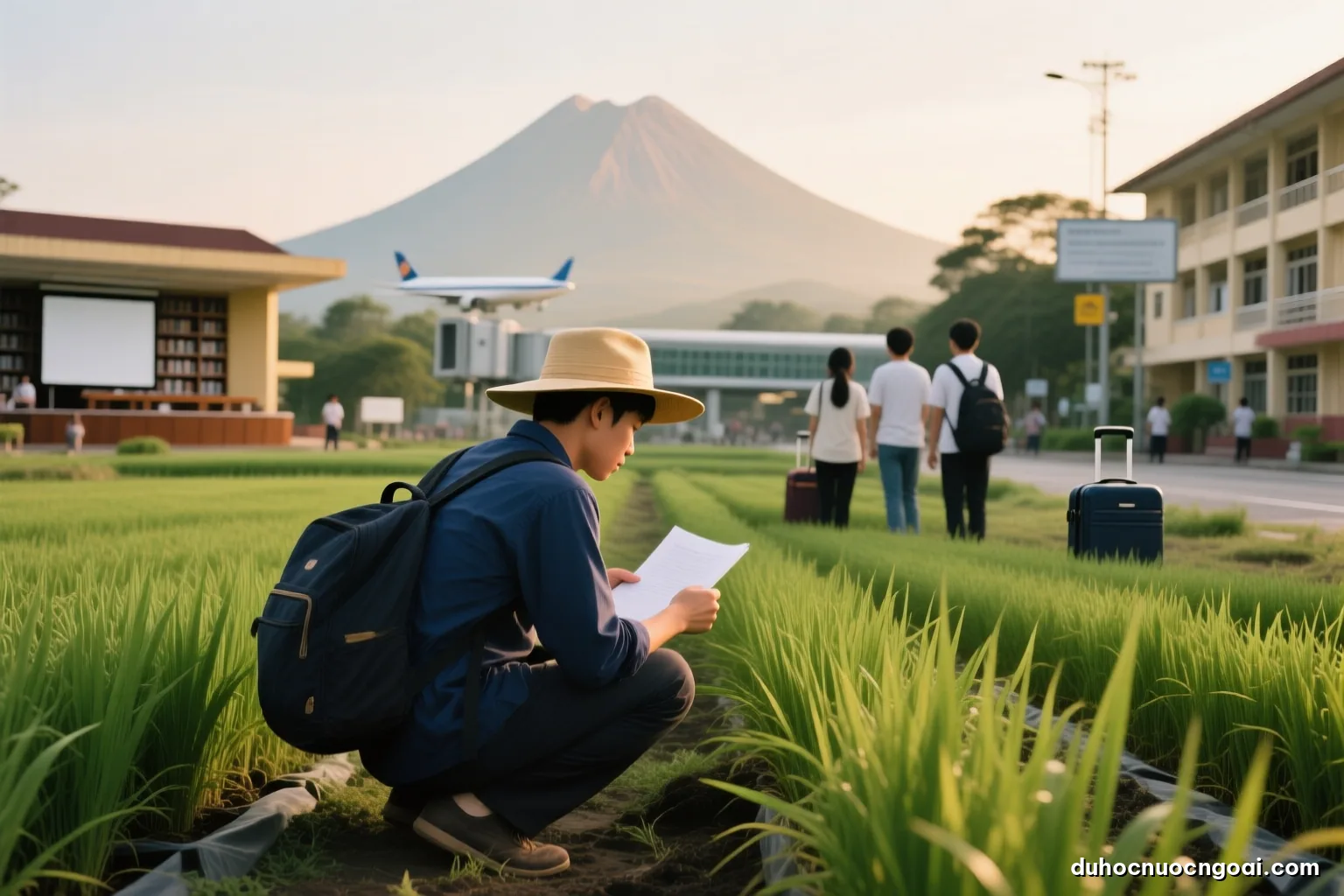
The Philippines is a sensible place for a master's or PhD if your field is agriculture, forestry, environment, development, public policy, education or business administration, and you want to study in English in a Southeast Asian environment at a moderate cost. Places worth considering include the University of the Philippines Los Baños next to the International Rice Research Institute, the University of the Philippines Diliman, the Asian Institute of Management (AIM) in Makati, Ateneo de Manila, De La Salle and subject-strong regional universities.
One distinctive source of support is the Southeast Asian Regional Center for Graduate Study and Research in Agriculture (SEARCA), based in Los Baños, which offers graduate scholarships to citizens of member countries of the Southeast Asian Ministers of Education Organization, including Vietnam. This article analyses the strong fields, programme structure, real duration, scholarships, fieldwork and degree recognition on returning home.
Why choose the Philippines for graduate study
The first reason is the ecosystem of regional organisations. The Philippines hosts the headquarters of the Asian Development Bank, the International Rice Research Institute, SEARCA and the Southeast Asian Ministers of Education Organization's Regional Center for Educational Innovation and Technology (SEAMEO INNOTECH). Students of agriculture, development and education have the chance to engage with these organisations' experts, data and projects, something hard to find in many other places.
The second reason is context. The Philippines is a developing, archipelagic country that faces frequent natural disasters, with tropical agriculture and urban challenges similar to Vietnam's in many respects. Thesis research here is usually set in a context close to what you will work on when you return home, rather than that of a developed industrial country. Graduate classes at the big universities include students from many Asian countries, building a regional network.
The third reason is language and cost: study is in English, and the overall cost is much lower than in Australia, the UK or the US. In exchange, laboratory facilities in many places are more modest, international rankings are lower, and real completion times are usually longer than the nominal duration. If your field needs expensive equipment or you are aiming for an academic career in the West, think carefully.
Places worth considering by field
The table below suggests starting points for research, not rankings. Each university has many programmes beyond those listed; check the specific programme and supervisors.
| Field | Places to look into | Notes |
|---|---|---|
| Agriculture, forestry, food technology | University of the Philippines Los Baños | Near the International Rice Research Institute, linked with SEARCA |
| Natural sciences, engineering, planning | University of the Philippines Diliman, De La Salle, Mapúa | Check the laboratories and faculty research projects |
| Business administration, development management | Asian Institute of Management (AIM), Ateneo, De La Salle | AIM was founded in 1968 and trains managers from many Asian countries |
| Public policy, public administration | University of the Philippines Diliman, Ateneo's school of government | Suits those working in government agencies or development organisations |
| Marine science, coastal environment | Silliman University, campuses of the University of the Philippines | The Philippines has very diverse marine ecosystems |
| Education | University of the Philippines Diliman, Philippine Normal University, the large private universities | Check whether programmes are full-time or weekend-based |
For research students, the supervisor matters more than the university's name. Read recent papers by faculty in your field, write a short introductory email with an outline of your idea, and ask whether they are taking new students before submitting a formal application.
Master's and doctoral structure: thesis, comprehensive exams and real duration
Master's programmes in the Philippines are usually of two types. Thesis programmes include coursework, a comprehensive or knowledge examination, then research and a thesis defence; non-thesis programmes replace the thesis with additional coursework, a project or a comprehensive exam. If you plan a PhD later or a research career, the thesis type is usually more valuable. MBA and applied programmes are usually non-thesis or include a practical project.
Doctoral programmes include coursework, a qualifying or comprehensive examination, a proposal defence, research and a dissertation defence; many universities require a published paper before graduation. The nominal duration is usually two years for a master's and about three to five years for a PhD, but in practice it is often longer because of research, procedures and committee schedules. Ask the university for the average completion time of international students in the programme, not just the duration on paper.
One detail to watch: many graduate programmes in the Philippines are designed for working professionals, with evening or weekend classes. As an international student on a 9(F) visa, you need a full-time programme that meets the conditions of student status. Weekend timetables may also affect degree recognition back in Vietnam if the mode of study does not meet the regulations. Ask clearly what mode of study will appear on the degree and transcript.
Scholarships: SEARCA and other sources
SEARCA scholarships. SEARCA awards graduate scholarships to citizens of member countries of the Southeast Asian Ministers of Education Organization, including Vietnam, for master's and doctoral study in agriculture and related fields at the University of the Philippines Los Baños and some partner universities in the region. Conditions usually include academic achievement, work experience in the field and a commitment to return home to work. The application cycle, conditions and level of support change from year to year, so read SEARCA's official announcements.
University scholarships and support. Some universities offer scholarships, tuition waivers or teaching and research assistant positions for graduate students, tied to faculty projects. Contacting a prospective supervisor early is the best way to find out whether places are available.
Project and organisation scholarships. International collaborative research projects and development organisations sometimes fund students to do their thesis within a project. The information usually travels through professional networks rather than advertisements.
Scholarships for Filipino citizens only. Many scholarships from Philippine government agencies are reserved for Filipino citizens. Read the nationality conditions carefully before putting effort into an application.
Scholarships on the Vietnamese side. The organisation where you work or human resource development programmes may provide support, usually with a commitment to serve after returning. Read the repayment terms carefully.
Graduate application requirements
A graduate application in the Philippines is broadly similar to other English-speaking countries, but there are a few particular points regarding documents and supervisors. The list below is the usual package; the university decides the details.
- Your university degree and transcript (and master's, for a PhD application), translated into English, certified and legalised as required.
- Proof of English if your previous programme was not taught in English, either an international certificate or the university's own test.
- Recommendation letters, usually two or three from lecturers or direct supervisors.
- A statement of purpose and a preliminary research outline for thesis and dissertation programmes.
- Entrance exam results if the programme requires them; for example, some MBA programmes have their own aptitude test.
- A supervisor's letter of acceptance for some doctoral programmes.
- A CV setting out your work experience and publications, if any.
Once you have an acceptance letter, the 9(F) student visa procedure applies as for bachelor's study. If you are bringing a spouse or children, ask the Bureau of Immigration about status for dependants before making plans.
Fieldwork and research ethics
Many graduate theses in the Philippines include fieldwork: farm household surveys, biological sampling, community interviews. Research involving people usually has to be approved by the university's research ethics committee before data collection. Research on wildlife or genetic resources, or in areas belonging to indigenous communities, may need separate permits from the regulator and community consent under Philippine law. Permits can take many months, so build them into your thesis plan early.
For international students there is an additional layer: if you want to use data from Vietnam for a thesis in the Philippines, you must comply with both sides' rules on data collection and transfer, especially personal data. Discuss your choice of research site with your supervisor, because research in Vietnam may be closer to your future work but is more complicated in terms of procedures and supervision.
Finally, standards of academic integrity at the big universities are very strict: plagiarism, copying data or having someone write for you can all lead to suspension or revocation of your degree. If you are not yet familiar with English citation standards, learn them in your first semester through the university's writing support courses.
Degree recognition on returning to Vietnam
Master's and doctoral degrees awarded by foreign institutions are recognised under the regulations of the Ministry of Education and Training. The main conditions are that the institution and programme are recognised by the competent Philippine authority and that the mode and duration of study meet the regulations. For doctoral degrees, the recognition file usually considers both the dissertation and the course of study. Fully online programmes or unusually shortened ones may face difficulties with recognition.
The simple precaution is to check before enrolling: ask the university for written confirmation of the mode of study and the period of full-time study in the Philippines, and keep all academic documents, visas and entry and exit stamps throughout the course. When you graduate, obtain your official transcript and a programme confirmation from the university before leaving the Philippines, because doing it remotely later takes much longer.
If you work for a government agency or a university in Vietnam, ask your HR department about any specific requirements for foreign degrees before you go. If you would like someone to help you choose a programme and plan your scholarship application, the Global Gate Pass advisory team in Ho Chi Minh City (TP.HCM) takes bookings; the first session is free with no obligation.
Frequently asked questions
How long does a master's in the Philippines take?
The nominal duration is usually about two years for a thesis programme, possibly shorter for a non-thesis programme. In practice many students take longer because of research, defence procedures and committee schedules. Ask the university for the average completion time of international students so you can plan your finances and visa.
Who is the SEARCA scholarship for?
SEARCA's graduate scholarships are for citizens of member countries of the Southeast Asian Ministers of Education Organization, including Vietnam, studying agriculture and related fields at partner universities. The specific conditions, application cycle and benefits change from year to year, so read the official announcements.
Is an MBA from the Philippines worth it?
Its value depends on the specific programme, its accreditation, the alumni network and your career goals. The Asian Institute of Management and the big private universities in Manila have a tradition of training managers from many Asian countries. Compare the programme with other options based on where you plan to work.
Can I study a master's in the evenings or at weekends on a student visa?
A student visa requires you to follow a programme that suits student status, usually full-time. Many evening and weekend programmes are designed for people working in the Philippines. Ask the university whether the programme is eligible for international students on a 9(F) visa, and what mode of study will appear on the degree.
Can I bring my family while doing a PhD in the Philippines?
There may be a residence status for dependants, but the conditions and procedures are set by the Bureau of Immigration and may change. Ask the Bureau of Immigration and the university's international office before planning, and include extra living costs and schooling for your children in your budget.
Can my thesis research be about Vietnam?
Usually yes, if your supervisor agrees and the topic suits the programme. You must comply with the university's research ethics rules and with the regulations on data collection in Vietnam. Discuss the research site with your supervisor from the start, because remote research may lengthen the time to completion.